December · January · February · Tirthan Valley
Jibhi in Winter
Snow, cold, silence — and the best version of the bathtub
Temperature
−3°C to 10°C
Snowfall at village
1–3 times / winter
Jalori Pass
Closed Dec–Mar
Crowds
Lowest of the year
Overview
What Jibhi Looks Like in Winter
The tourist traffic stops in late November. By December, Jibhi has almost no visitors — the cafes that were packed in October are now half-lit, the road through the market is quiet, and the only sound in the forest is wind through the deodar trees.
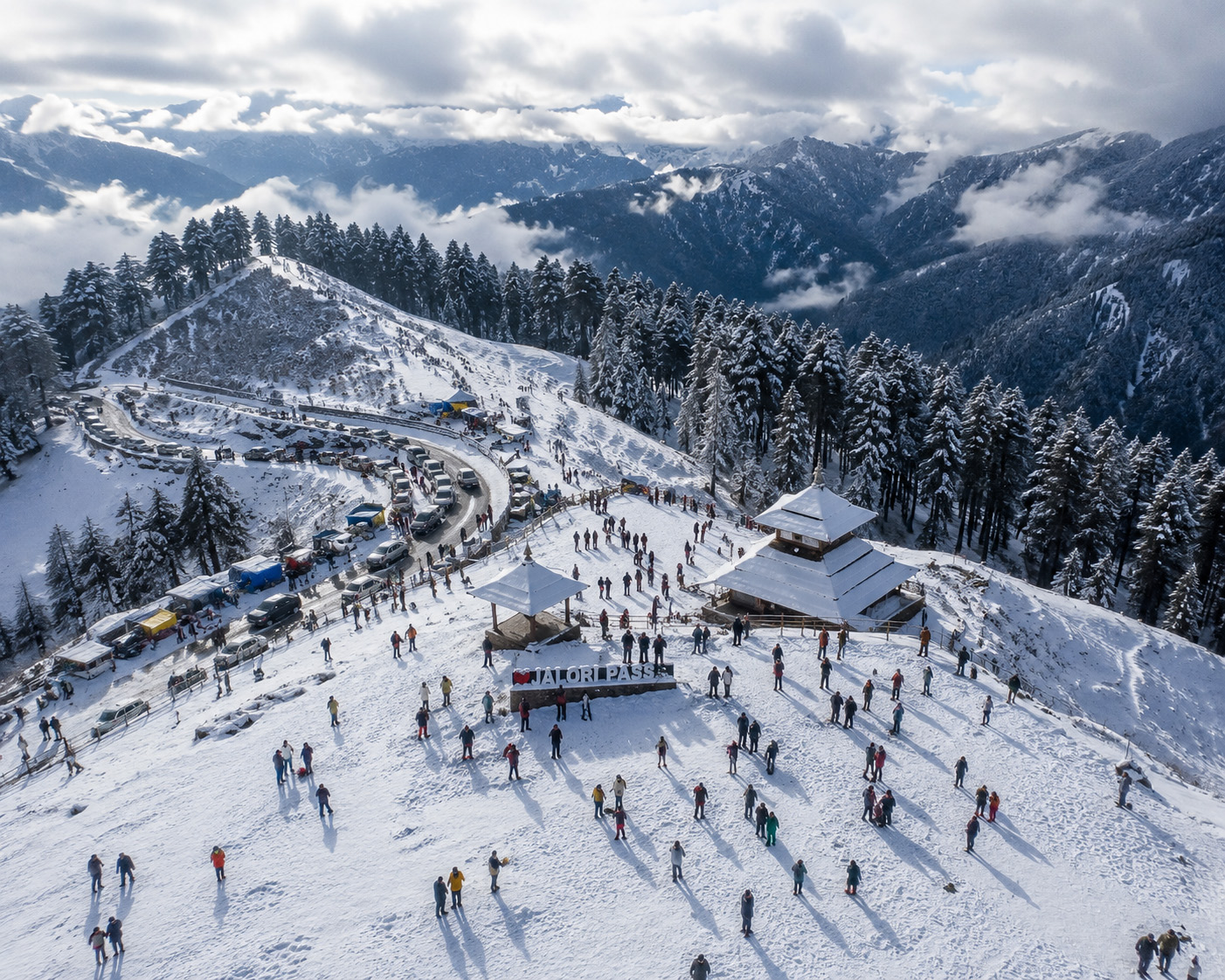
When it snows — and it does, once or twice or three times between December and February — the forest changes completely. The thick canopy holds the snow in strange shapes. The wooden cottages look exactly like they should look. The air smells different: clean in a way that has no other word.
Winter Jibhi is not for everyone. Jalori Pass closes. The high-altitude treks are off the table. You can't do Serolsar Lake or Raghupur Fort. What you can do is slow down, stay warm, and let the mountain be itself. For that specific thing, there is no better time.
The honest summary: If your trip is about treks and activity, come in October. If your trip is about atmosphere, solitude, and the cold — come in January.
Month by Month
December, January & February
December
- Day temperature
- 4°C – 10°C
- Night temperature
- −1°C – −3°C
- Snowfall
- Possible from mid-December
- Jalori Pass
- Closed (heavy snow)
- Crowds
- Very low
Best for: Quiet atmosphere, clear skies early in the month, snow if lucky
Watch: Nights very cold. Fewer cafes open from Christmas week.
January
- Day temperature
- 2°C – 8°C
- Night temperature
- −4°C – −6°C
- Snowfall
- Most likely — 1–2 snowfall events
- Jalori Pass
- Closed
- Crowds
- Lowest of the year
Best for: Snow in the forest, absolute solitude, bathtub in the cold
Watch: Coldest nights. Carry full winter gear. Some stays may require advance notice for heating.
February
- Day temperature
- 3°C – 10°C
- Night temperature
- −3°C – −5°C
- Snowfall
- Possible, less frequent than January
- Jalori Pass
- Closed (reopens March)
- Crowds
- Low, slightly more than January
Best for: Late February: first warmth, long afternoons, snow still around
Watch: Still cold at night. Valentine's week sees a small uptick in bookings — book early.
Winterfell Cottages
The Bathtub in Winter Is the Point
The glass-enclosed outdoor bathtub at Winterfell works in every season. In winter it is different — the water is hot, the air outside is below zero, and there is snow on the forest. You can see the mountains from the tub. If it has snowed recently, the deodar branches hold it at eye level.
This is the specific thing that makes a winter stay here worth doing. Not the treks — those are closed. Not the cafes — some of those too. The bathtub, the fire, the cold outside, and the silence.
All three cottages have heating. Hot water is available 24/7. Winter rates are the lowest of the year.
Practical
What's Open in Winter
Winterfell cottages
All three units open year-round. Heating available. Hot water 24/7.
Jibhi village road
Open year-round. Cleared within hours after snowfall.
Jibhi Waterfall
Accessible but reduced flow in winter. Entry may be unattended — carry ₹20.
Kulhi Katandi (Mini Thailand)
Accessible. Water levels lower. Ice on rocks possible — wear grip shoes.
Cafes & restaurants
Several close in January–February. Roughly half operate. Ask your stay for current list.
Jalori Pass road
Closed from late November to March. Opens when HPPWD clears it.
Serolsar Lake trek
Trail snowbound. Do not attempt without guide and proper gear.
Raghupur Fort trek
Ridgeline heavily iced. Not recommended December–February.
Chehni Kothi
The heritage tower itself is accessible. Road to the base is narrow — check before going.
Packing
What to Pack for Jibhi in Winter
Down jacket (800-fill or equivalent)
Nights reach −6°C. This is non-negotiable.
Thermal base layers — top and bottom
Layering is the system. Thermals are the foundation.
Fleece mid-layer
For the transition between heated room and outside.
Wool socks — minimum 3 pairs
Feet get cold fast on stone floors and outdoor paths.
Waterproof insulated boots
Snow and ice on paths — grip and warmth both matter.
Gloves and warm hat
Ears and fingers feel the cold before the rest of you.
Lip balm and face moisturiser
Winter air in Himachal is very dry — cracking happens fast.
Power bank
Cold kills phone batteries. At 0°C a full battery drains in hours outdoors.
Sunglasses
Snow reflects UV strongly. Glare on bright days is intense.
Any medications at correct doses
Nearest pharmacy is in Banjar (20 min). Stock up before arriving.
FAQ
Common Questions About Jibhi in Winter
Does it snow in Jibhi in winter?
Yes — 1–3 snowfall events per winter, most common in January and February. The village (2,150m) gets light snow; surrounding higher areas and Jalori Pass (3,120m) get heavy snow.
What is the temperature in Jibhi in December?
Daytime 4–10°C, nights −1°C to −3°C. Snow possible from mid-December. Roads open; Jalori Pass closed after heavy snow.
What is the temperature in Jibhi in January?
Coldest month — daytime 2–8°C, nights −4°C to −6°C. Snowfall most likely. Jalori Pass closed. Village road open.
Is Jibhi worth visiting in winter?
For solitude seekers, couples, and people who want the mountain in its quietest form — yes. Zero crowds, lowest rates, snow in the deodar forest. Trade-off: Jalori Pass treks are off the table.
Is Jalori Pass open in winter?
No. Jalori Pass closes late November–December and typically reopens in March. The Jibhi village road stays open year-round.
What is Jibhi like in February?
Still cold (0–10°C days, −3 to −5°C nights) but with more daylight and first hints of warmth in late February. Snow still possible. Jalori Pass still closed.
What to pack for Jibhi in winter?
Down jacket, thermal layers, fleece, wool socks, waterproof insulated boots, gloves, warm hat, lip balm, sunglasses, power bank. Treat it like a serious cold-weather trip.
Planning a winter trip to Jibhi?