Kullu District · GHNP · Himachal Pradesh
Tirthan Valley
Complete Travel Guide, Himachal Pradesh (2026)
The Tirthan River originates from the icy glacial springs of Hanskund — also known as Tirth Top — a snow-covered peak rising to about 4,000 metres within the Great Himalayan National Park. Flowing through dense deodar forest and past traditional wooden villages, the river is known for its exceptionally clean, turquoise water and almost completely undisturbed surroundings. Tirthan Valley is one of the least-commercialised river valleys in Himachal Pradesh — not because it lacks anything, but because it sits well off the main tourist corridor. No Manali traffic, no Shimla crowds, no Kullu funfairs.
This guide covers the whole region — the river side and the mountain side — its geography, villages, what to do, when to visit, how to reach, and where to stay.
River origin
Hanskund, ~4,000m
From Delhi
~500 km · 11–12 hrs
UNESCO
GHNP — World Heritage Site
Best time
Mar–Jun · Sep–Nov
At a Glance
Tirthan Valley Quick Facts
Location
Kullu District, Himachal Pradesh
River
Tirthan River (Beas tributary)
River Origin
Hanskund / Tirth Top, ~4,000m (glacial springs)
GHNP Entry
Shairopa — 5–6 km from Banjar
UNESCO Status
GHNP — World Heritage Site (2014)
Distance from Delhi
~500 km · 11–12 hrs
Distance from Chandigarh
~230 km · 6–7 hrs
Nearest Airport
Bhuntar, Kullu (~55–70 km)
Best Time
Mar–Jun · Sep–Nov
Known For
Trout fishing, GHNP, Jibhi, Jalori Pass
Geography
Two Roads from Banjar
Most people arrive at Banjar town and then face a choice they do not know they are making. The two roads from Banjar lead to two distinct experiences — the mountain side and the river side.
The Mountain Side
Banjar → straight → Jibhi (8 km) → Sojha → Jalori Pass
Vibe
Mountain, altitude, forest, views
Places
Accommodation style
Standalone single and duplex wooden cottages scattered across the forest — private, separated units. Boutique character.
Best for
Couples, trekkers, slow travel, people who want privacy in the forest with mountain views and day trip access to Jalori Pass.
Activities
Jalori Pass day trip
Serolsar Lake trek
Raghupur Fort trek
Jibhi waterfall walk
Cafe days
Chehni Kothi heritage visit
The River Side
Banjar → left → along Tirthan River → Shairopa (5–6 km) → Gushaini
Vibe
River, GHNP, fishing, raw nature
Places
Accommodation style
Larger riverside lodges — multi-room units built along the river bank. More lodge-style, group-friendly, closer to water sound.
Best for
Fishing enthusiasts, GHNP trekkers, larger groups, people who want the river as their constant backdrop and direct park access.
Activities
Trout fishing (permits at Shairopa)
GHNP guided treks
River walks
Birdwatching
Village exploration
Forest immersion
Side by Side
Jibhi or Tirthan Valley — Which Side Suits You?
Both are part of the same region. The choice is about what you want to wake up to — a forested mountain slope or the sound of a river.
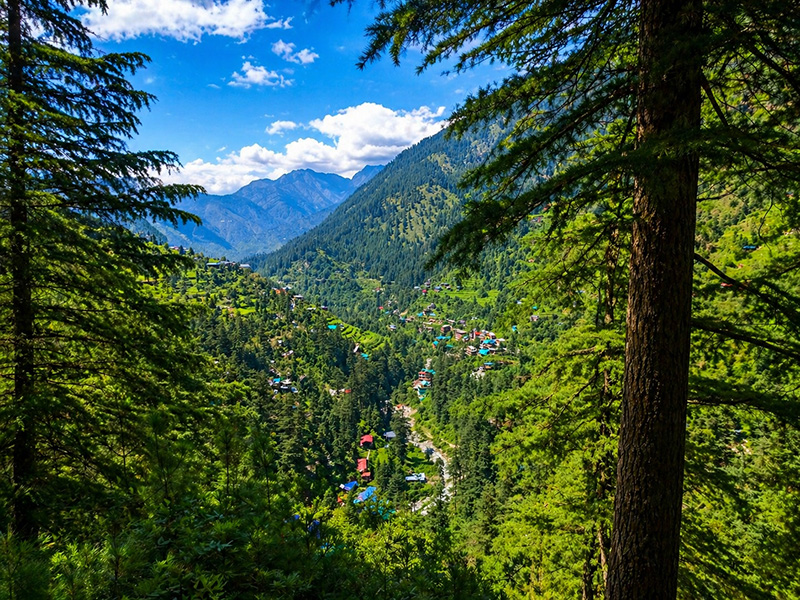
Mountain Side
Jibhi
- Deodar forest, altitude, valley views
- Standalone wooden cottages — private units
- Treks to Jalori Pass & Serolsar Lake
- Quiet market, cafés, waterfalls nearby
- Base for the mountain side of the region
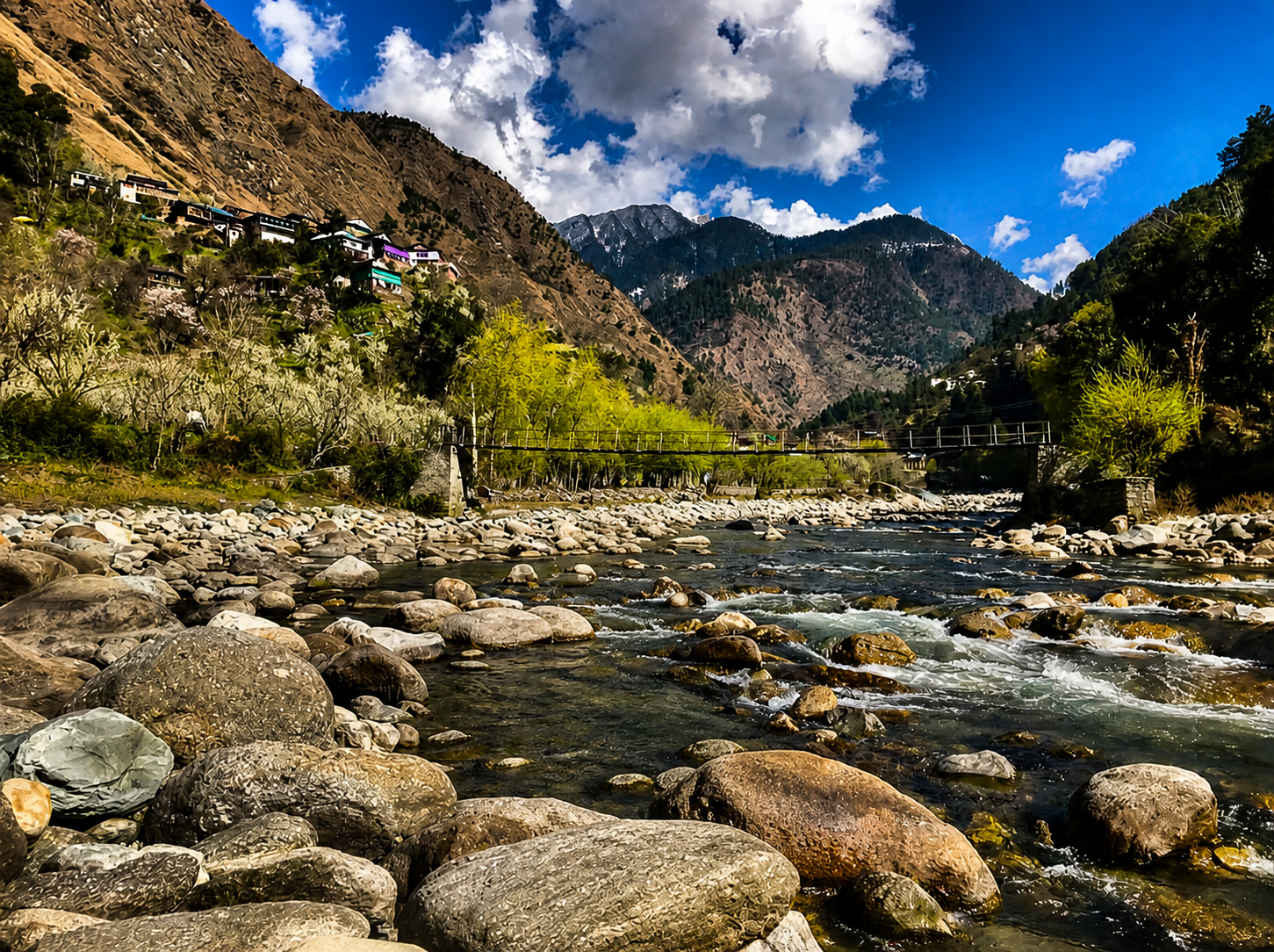
River Side
Tirthan River Valley
- River sound, GHNP access, raw wilderness
- Large riverside lodges — multi-room units
- Trout fishing (permits at Shairopa)
- GHNP guided treks into protected forest
- Shairopa → Gushaini → Bathad & Sharchi
Villages & Areas
Places in the Tirthan Valley Region
Jibhi
The most visited village in the region. Dense forest, a walkable waterfall, compact market, cafes, and boutique wooden stays. The launch point for Jalori Pass, Serolsar Lake, and Raghupur Fort. Most visitors who say they are going to 'Tirthan Valley' end up based in Jibhi.
Full guide →Shairopa
The official GHNP entry point on the Tirthan River side. Fishing permits for the Tirthan River are issued here. The trailhead for guided treks into the national park. This is where the valley truly opens into protected forest and the river runs at its most undisturbed.
Gushaini
The main settlement in the Tirthan River corridor. Quieter and less developed than Jibhi. Accommodation here is predominantly large riverside lodges — multi-room units built along the river bank. The Tirthan River is at its most accessible and loudest here. Road continues to Bathad village beyond.
Tandi
A hilltop hamlet off the Gadagushaini road from Jibhi. Wide open valley views, quieter than Jibhi market, preferred for private cottage stays. Winterfell operates a Kathkuni-style stone and wood property here with views across the full valley.
Full guide →Sojha
Between Jibhi and Jalori Pass on the highway. Noticeably higher and colder, with consistent snow-capped mountain views year-round. Increasingly drawing its own visitors rather than serving just as a pass-through. Good base if proximity to Jalori Pass matters more than village infrastructure.
Full guide →Sharchi
A small emerging village on a branch road off the Tirthan River corridor. Sitting at higher altitude, Sharchi offers the kind of open panoramic views associated with Tandi and Bahu — mountains, valley floor below, forest around. Fewer visitors and very limited infrastructure currently, which is its current appeal.
Experiences
Things to Do in Tirthan Valley
The river side and mountain side offer different activity profiles. River: fishing and GHNP. Mountain: trekking, waterfall, cafes, views.
Trout Fishing, Tirthan River
The Tirthan River is one of Himachal Pradesh's best trout fishing rivers. Permits are issued at Shairopa (GHNP entry, 5–6 km from Banjar). The water runs clean and cold directly from glacial springs inside GHNP. Season: March–June and September–October.
GHNP Guided Treks
The Great Himalayan National Park offers guided treks from Shairopa into the core forest zone. These are different from Jalori Pass treks — deeper, wilder, less visited. A licensed guide is required and permits are issued at Shairopa.
Jalori Pass
At 3,120m, Jalori Pass connects the Kullu and Tirthan valleys. Open April to November. Both Raghupur Fort and Serolsar Lake are reachable from the pass. Accessed from the Jibhi/mountain side — a day trip from Jibhi or Sojha.
Raghupur Fort Trek
3 km one-way from Jalori Pass to ruins of a Mandi-era fort at ~3,400m. Some of the widest Himalayan views in the region. Easy to moderate — manageable for most fitness levels.
Serolsar Lake Trek
5 km forest trail from Jalori Pass through oak and rhododendron to a sacred alpine lake at ~3,100m. The Budhi Nagin temple at the lake edge is an important local site. Quieter and shadier than the Raghupur Fort route.
Jibhi Waterfall
A short walk from Jibhi market through dense cedar forest — mossy stone paths, wooden bridges, stream crossings. Go early morning. Best before 9am when the forest is quiet.
Seasons
Best Time to Visit Tirthan Valley
Mar – Jun
Spring & Early Summer
10°C – 25°C
Best fishing season (river levels right, fish active). Jalori Pass reopens, apple blossoms in orchards, forest at peak green. May is the busiest month across the region.
Jul – Aug
Monsoon
18°C – 26°C
River runs strong — powerful and loud. Forest is dramatically lush. Fishing is typically suspended during peak monsoon. Jalori Pass treks become wet and muddy. Roads occasionally disrupted near Aut.
Sep – Nov
Post-Monsoon
5°C – 22°C
River clears after monsoon — best water conditions of the year for fishing (September–October). Forest turns gold in October. Excellent clarity for Jalori Pass views. Crowds drop sharply after September.
Dec – Feb
Winter
-2°C – 10°C
The river is at its quietest and most beautiful. GHNP remains accessible. Jalori Pass closes with snow. Jibhi village stays open. Cold nights, possible snowfall at Sojha and Sharchi.
Fishing note: Trout fishing on the Tirthan River is typically permitted March to June and September to October. Fishing is suspended during peak monsoon (July–August) when river levels are unsafe. Confirm current season rules at Shairopa when you arrive.
Getting Here
How to Reach Tirthan Valley
All routes converge at Aut, then follow the Tirthan River road to Banjar. At Banjar: straight goes to Jibhi (8 km), left follows the river toward Shairopa and Gushaini.
From Delhi
NH44 → Chandigarh → Mandi → Aut → Banjar
At Aut: take the road toward Banjar before the tunnel. The tunnel leads to Manali. From Banjar, go straight for Jibhi (8 km) or turn left along the river for Shairopa/Gushaini.
From Chandigarh
Mandi → Aut → Banjar
HRTC and private buses run overnight from Chandigarh to Banjar. From Banjar, taxis reach Jibhi in 20 minutes or Shairopa in 10 minutes.
From Manali
Kullu → Aut → Banjar
Good option if combining Manali and Tirthan Valley in one trip — both are on the same highway corridor.
From Shimla
Rampur → Aut → Banjar
Mountain roads narrow after Rampur. Allow extra time, especially in monsoon.
Where to Stay
Where to Stay in Tirthan Valley
The two sides of the valley have distinctly different accommodation characters. The Jibhi/mountain side is built around standalone wooden cottages — private, separated units scattered across the forest. Boutique and quiet. If a property wants five rooms, they typically build five standalone units rather than one five-room building.
The Tirthan River side (Shairopa–Gushaini) is predominantly larger riverside lodges — multi-room buildings along the riverbank, more group-oriented, with the river as constant backdrop.
Winterfell operates on the Jibhi/mountain side — private cottages and A-frame cabins with valley views, glass bathtubs on balconies, and direct booking. Properties in Jibhi and Tandi.
Winterfell, Jibhi
Mountain side5 standalone cottages — log house, A-frames, duplex cottages. Private glass bathtubs on balconies. Mountain side. Valley and forest views.
Wintersoul by Winterfell, Jibhi
Mountain sideForest A-frame cabins in Jibhi forest. Standalone units, deep forest immersion, mountain side. No bathtub.
Kathkuni Cottage, Tandi
Mountain sideStandalone Winterfell property 5 km from Jibhi. Traditional stone and wood. Hilltop, wide valley views. Mountain side.
Riverside Lodges, Gushaini
River sideMulti-room lodge buildings along the Tirthan River. River vibe, GHNP access, fishing. River side. Good for larger groups.
Frequently Asked
Tirthan Valley — Common Questions
What is Tirthan Valley?
Tirthan Valley is a river valley in Kullu district, Himachal Pradesh, formed by the Tirthan River — which originates from glacial springs at Hanskund (Tirth Top, ~4,000m) inside the Great Himalayan National Park. The name is used broadly for the whole region, and more specifically for the river corridor from Shairopa to Gushaini.
Is Tirthan Valley the same as Jibhi?
Not exactly, though they are closely related. Jibhi is a village on the Banjar-Jalori road (8 km straight from Banjar) — a mountain destination with forest, cafes, standalone wooden cottages, and trekking. The proper Tirthan Valley is the road that branches left at Banjar and follows the river to Shairopa (GHNP entry, 5–6 km) and Gushaini — a river destination with larger lodges and fishing. Most visitors experience both sides without realising the distinction.
How far is Tirthan Valley from Delhi?
Approximately 500 km. Drive time is 11–12 hours. Route: Delhi → Chandigarh → Mandi → Aut → Banjar. At Banjar, straight goes to Jibhi; left follows the river to Shairopa and Gushaini.
What is Shairopa?
Shairopa (also written Sai Ropa) is the official entry point to the Great Himalayan National Park on the Tirthan River side — approximately 5–6 km from Banjar along the river road. Trout fishing permits for the Tirthan River are issued here, and guided GHNP treks begin from this point.
What is the best time to visit Tirthan Valley?
For fishing: March–June and September–October. For trekking (Jalori Pass, Raghupur Fort, Serolsar Lake): April–June and September–November. For snow and quiet: December–February. Avoid July–August if planning treks or fishing — monsoon makes both difficult.
What is the difference between staying in Jibhi vs the Tirthan River side?
Jibhi: standalone wooden cottages scattered in forest, mountain views, cafes, trekking access. Properties are typically private single or duplex units — boutique character. Tirthan River side (Shairopa-Gushaini): riverside lodges with multiple rooms in one building, river sound, GHNP access. Choose Jibhi for mountain isolation; choose the river side for water immersion and fishing.
Is Tirthan Valley good for families?
Yes, particularly families who enjoy nature over theme parks. The Jibhi waterfall walk, cafe days, and Jalori Pass drive are all manageable with children. Fishing on the river is an excellent activity for older kids. The village roads are narrow — pack light and drive slowly.
Stay on the Mountain Side
Private Cottages in Jibhi and Tandi
Standalone wooden cottages and A-frames with valley views, glass bathtubs on balconies, and a short drive to both sides of the valley. Book directly — no OTA markup.