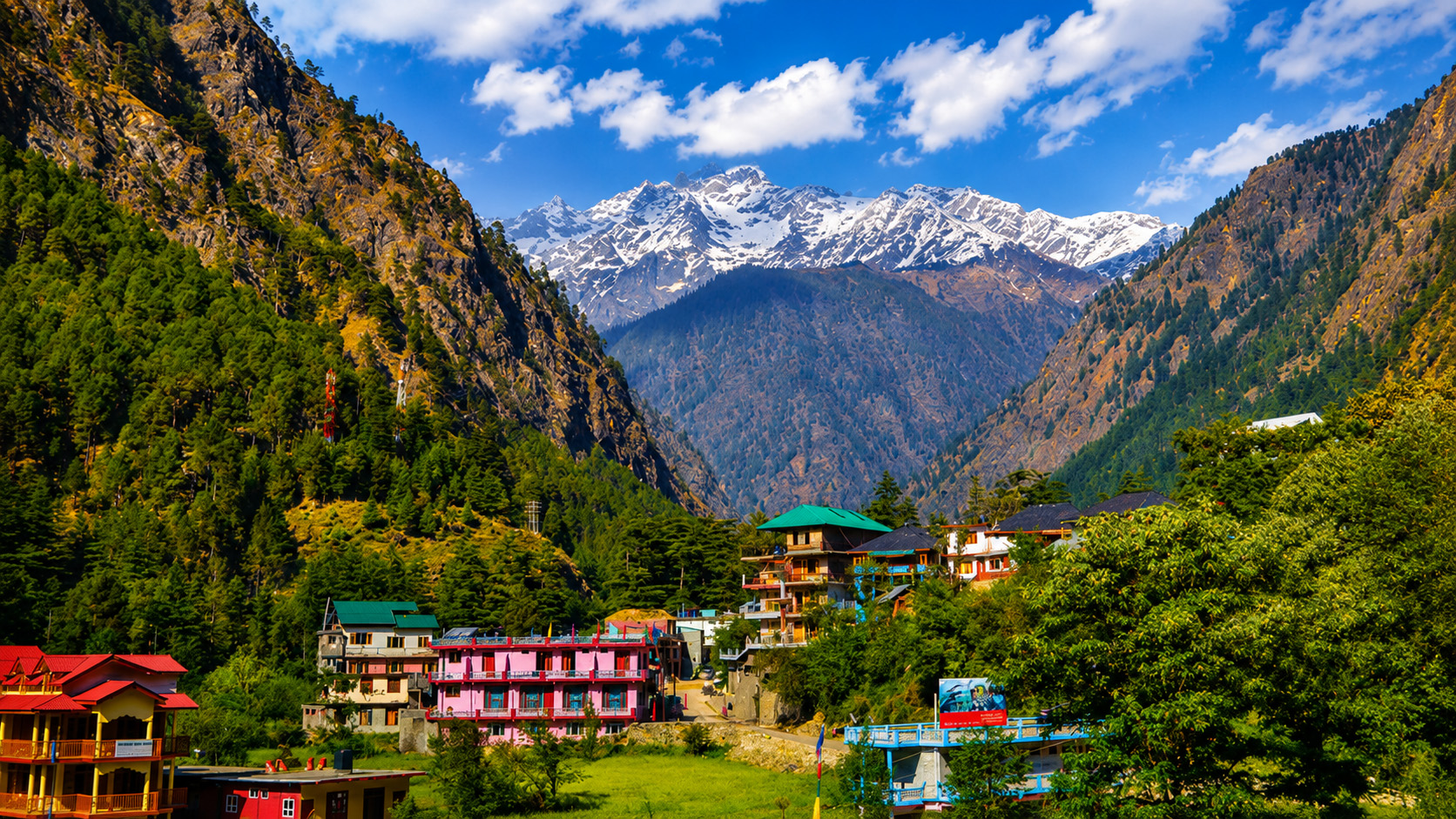
After Jibhi · Parvati Valley
Jibhi to Kasol
~83 km · 2.5–3 hours · Parvati Valley, 1,580m
Kasol sits in the Parvati Valley — a narrower, steeper, river-hugging valley than Jibhi's Banjar side. The vibe is more backpacker, the trails are longer, and the Kheerganga hot spring trek is the main reason most people come. The valley also holds Manikaran's geothermal springs, the isolated village of Malana with its own language and governance, and the almost unknown Magic Valley above the tree line. A natural second chapter on a Himachal circuit.
Seasonal road: Kheerganga camping update (2024): Overnight camping at the Kheerganga summit has been banned by the Forest Department. Trekkers must complete the route as a day trek and return to Barsheni, or stay at Kalga or Naktan village before/after. Guesthouses at the top have limited availability — confirm before trekking.
Quick Facts
Distance from Jibhi
~83 km
Drive time
2.5–3 hours
Altitude (Kasol)
1,580m
Altitude (Kheerganga)
2,950m
District
Kullu, Himachal Pradesh
River
Parvati River (Beas tributary)
Best season
Apr–Jun · Sep–Nov
Avoid
Jul–Aug (heavy rain, landslides)
Kheerganga camping
Banned since 2024 — day trek only
Cash / ATM
Withdraw at Bhuntar or Kullu — Kasol ATMs unreliable
How to Get There
Route: Jibhi to Kasol
Withdraw cash in Bhuntar before entering the Parvati Valley — ATMs in Kasol are frequently empty or out of service. The Bhuntar to Kasol road follows the Parvati River through a narrow valley; drive carefully on blind bends. Taxi union controls all local transport — Uber and Ola do not operate here.
Jibhi → Banjar
7 km, ~20 min on the Banjar Valley road
Banjar → Aut
25 km, ~40 min — descend to the Beas River junction
Aut → Bhuntar
20 km, ~35 min — follow the Beas north to Bhuntar; left turn onto the Parvati Valley road here; withdraw cash before entering the valley
Bhuntar → Kasol
~30 km, ~1 hour along the Parvati River — road is narrow with blind bends; follow the river
What to Do
Highlights Around Kasol
Kheerganga Hot Springs — Day Trek (Camping Now Banned)
The most popular trek from Kasol — 12 km one way through Parvati Valley forest to a hot spring at 2,950m. The spring temperature ranges from 64°C to 80°C, meaning you soak in the pools fed by the cooled runoff rather than the source. Since 2024, the Forest Department has banned overnight camping at the summit due to waste and environmental damage. You must complete the trek and return to Barsheni the same day, or stay in the villages of Kalga or Naktan (below the treeline) before/after. Start from Barsheni trailhead by 7 AM for a comfortable day return.
Manikaran — Hot Springs and the Guru Nanak Miracle
Six kilometres from Kasol, Manikaran Sahib is a major Sikh pilgrimage site on the Parvati River. The mythology runs deep: Parvati lost a jewel (mani) here, which was swallowed by the serpent Sheshnag; Guru Nanak performed a miracle that returned it. The geothermal springs beside the gurudwara are real and permanent — water boils at the surface year-round. Rice for langar (community kitchen) is cooked directly in the spring water. Non-Sikhs are welcome; cover your head before entering.
Malana — Kanashi, Democracy, and the No-Touch Protocol
Malana is an isolated village above the Parvati Valley reached via a separate road from Jari (between Bhuntar and Kasol), followed by a 3 km steep climb on foot. Its residents speak Kanashi — a language unrelated to Hindi or any Pahadi dialect, with possible links to Dardic or Alexander-era Greek origins per local legend. The village has its own governance system: a two-house assembly called Jayeshang (upper house) and Kanishthang (lower house). Outsiders must not touch any structure, resident, or livestock — fines for violations are levied on the spot by the village council. The rule is not symbolic; follow it.
Magic Valley — Waichin, 2,743m
Five kilometres above Malana, the Waichin Valley (commonly called Magic Valley) sits at 2,743m with fewer than 100 permanent residents, no electricity grid, and no mobile coverage. Reached by extending the Malana route or via a separate forest path. Basic homestay accommodation runs ₹1,000–1,500 per night. One of the least-visited inhabited valleys in the Kullu district. Carry food, a warm layer, and a headtorch.
Pulga — Fairy Forest
A small village 5 km beyond Kasol on the valley road — named for the ancient pines that form a dense canopy over the path into the village. Quieter than Kasol, with a small guesthouse and café scene that has become a digital nomad base. Good internet at a few places; the forest environment is unusually old-growth for this altitude.
Tosh — High Village, Glacier View, Long Stays
At the end of a branch road off the Parvati Valley, Tosh is the highest village reachable by road on this side. The Kutla Glacier above it is visible from the village. Long-stay costs in Tosh range from ₹20,500 to ₹41,000/month (food, accommodation, basic living) — it has become a genuine slow-travel and remote-work destination for travellers who want altitude without going to Spiti.
Chalal Village
A 20-minute walk from Kasol across a suspension bridge. Quieter than Kasol, with guesthouses along a forest trail above the Parvati River. Good if you want the valley feel without the market noise. Most long-stay travellers in the valley based here rather than in Kasol proper.
Seasons
Best Time to Visit Kasol
Apr–Jun
Best season
Clear weather, green valley, river in full flow. Kheerganga trail is open. Warm days, cool nights. Most popular window — accommodation books up; plan ahead.
Sep–Nov
Post-monsoon
Very clear skies after the rains. Landscapes lush and green. October is excellent — fewer crowds, cool weather, good for Kheerganga day trek before winter. Pulga and Tosh quieter than spring.
Dec–Mar
Cold, low crowd
Kasol village is accessible but cold. Kheerganga trail may have snow above 2,500m — assess trail conditions before going. A quiet time if you just want the village and Manikaran.
Jul–Aug
Monsoon — avoid
Heavy rain causes landslides on the Parvati Valley road. Kheerganga trail becomes dangerous and slippery. Nearest hospital is in Kullu, not in the valley. Not recommended.
FAQ
How far is Kasol from Jibhi?
Kasol is approximately 83 km from Jibhi by road. The drive takes 2.5–3 hours via Banjar (7 km), Aut (25 km from Banjar), and Bhuntar (20 km from Aut). You turn off at Bhuntar and follow the Parvati River road for the final ~30 km to Kasol.
Is overnight camping at Kheerganga still allowed in 2026?
No. Overnight camping at the Kheerganga summit was banned by the Kullu Forest Department in 2024. The trek is now a day-return from Barsheni. If you need accommodation near the trek, stay the night before in Kalga or Naktan village (both below the treeline) and start early. A handful of permanent guesthouses at the top still operate with limited beds — call ahead, as they fill quickly.
What temperature is the Kheerganga hot spring?
The source temperature of the Kheerganga spring is between 64°C and 80°C — too hot to enter directly. The pools accessible to trekkers are fed by cooled runoff water mixed to a tolerable temperature. After a 12 km one-way trek, they are very welcome.
Can I visit Malana as a tourist?
Yes, but the village has strict rules: do not touch any structure, person, or animal. Fines are levied on the spot for violations — the village council enforces this. Photography inside the village requires permission. Malana Cream (the valley's cannabis resin) is illegal to possess, purchase, or carry. Penalties under NDPS apply to tourists.
Can I do Jibhi and Kasol in the same trip?
Yes — and it is an easy combination. At ~83 km, Kasol is only 2.5–3 hours from Jibhi. Most people do Jibhi first (3–4 nights), then drive to Kasol (2–3 nights). Both are valley destinations with forest and river character, but very different in vibe: Jibhi is quieter and more private; Kasol is a backpacker village with a busier scene.
Where should I withdraw cash before Kasol?
Bhuntar (at the valley entrance, near the airport) is the most reliable place. Kullu town also has ATMs. ATMs in Kasol are often out of cash, especially on weekends and during peak season. Many guesthouses and cafes in Tosh, Pulga, and Malana do not accept cards at all.
Is the Jibhi to Kasol drive safe?
Yes, outside monsoon season (July–August). The road is well-travelled — Jibhi to Aut is straightforward, and the 20 km from Aut to Bhuntar follows the Beas. The stretch from Bhuntar into the Parvati Valley is narrow with blind bends — drive carefully. Nearest hospital is at Kullu, approximately 20 km from Bhuntar.
Continue the Circuit
Start Here
Begin at Winterfell, Jibhi
Private wooden cottages in the Banjar Valley — a quiet first stop before continuing to Kasol and beyond.