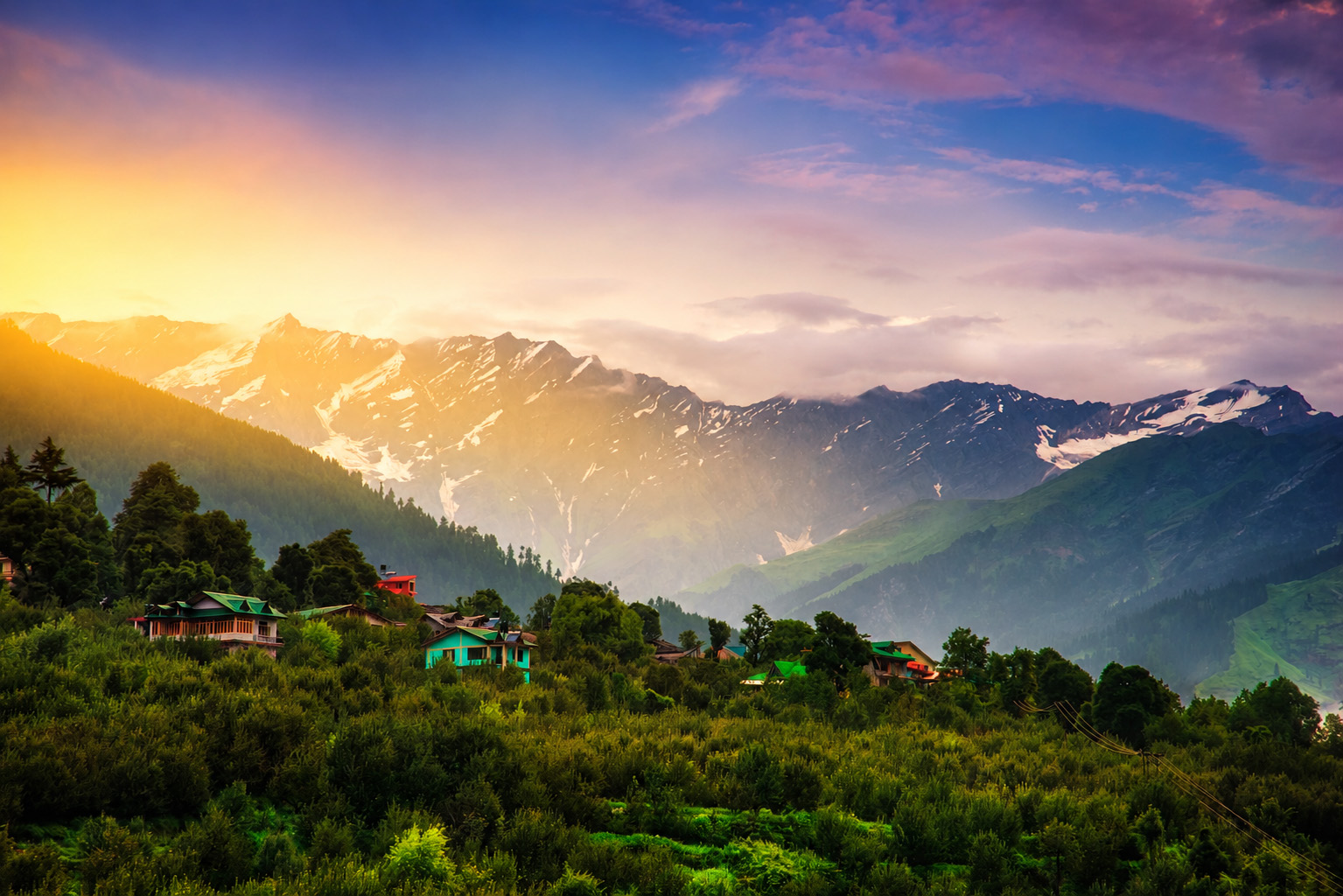
After Jibhi · Kullu Valley
Jibhi to Manali
~110 km · ~3 hours · Kullu district, 2,050m
Manali's name comes from Manu-Alaya — the abode of Manu, the progenitor of humanity in Hindu mythology, who is said to have descended here after a great flood and chose this valley to restart the world. That mythological weight is still carried in the Old Manali lanes and the forest-set Hadimba Temple. Manali is the most direct next stop from Jibhi — a 4–5 hour drive north up the Kullu Valley — and it gives you access to Rohtang Pass, Solang Valley, Vashisht hot springs, and the roads toward Spiti and Leh.
Quick Facts
Distance from Jibhi
~110 km
Drive time
~3 hours
Altitude
2,050m
District
Kullu, Himachal Pradesh
River
Beas River
Rohtang Pass
3,978m — open Jun–Oct (permit required)
Atal Tunnel
9.02 km — open year-round to Lahaul/Sissu
Best season
Sep–Nov (clarity) · Jan–Feb (snow)
Nearest airport
Bhuntar (Kullu), ~50 km
Bike rental (2026)
Royal Enfield Classic 350 ₹1,000–1,500/day
How to Get There
Route: Jibhi to Manali
Jibhi → Aut
35 km, ~1 hour — descend through Banjar to the Beas River junction at Aut
Aut → Kullu
30 km, ~45 min — follow NH3 north along the Beas River through the Kullu Valley
Kullu → Manali
44 km, ~1 hour — continue north through the upper Kullu Valley; road widens past Patlikuhl and traffic picks up near Manali
What to Do
Highlights Around Manali
Hadimba Devi Temple (1553 CE) — Kath-Kuni Masterpiece
Built in 1553 CE by Maharaja Bahadur Singh, the Hadimba Temple is set inside the Dhungri Van Vihar deodar forest a short walk from town. It is dedicated to Hadimba Devi, the Rakshasa wife of Bhima (the Pandava) — and the valley's supreme deity in local tradition. The Kath-Kuni construction method alternates layers of cedar and stone without mortar, creating a structure that has withstood Himalayan earthquakes for nearly 500 years. The four-tiered pagoda roof is covered in antlers. One of the finest pieces of medieval wooden architecture in Himachal Pradesh.
Old Manali — Bohemian, Quiet, Real
Three kilometres uphill from the busy Mall Road, across the Manalsu River, Old Manali feels like a different place entirely. Cobblestone paths, apple orchards, traditional Himachali houses, and a dense concentration of cafes. Cafe 1947, by the gushing Manalsu, is known for live acoustic music, wood-fired pizza, and Israeli shakshuka. The Lazy Dog Lounge offers river views and reliable Wi-Fi. Drifters' Inn has books and long-stay energy. Better base than Mall Road for most travellers.
Vashisht Village — Ancient Springs
A short walk from town, Vashisht honors the Vedic sage Vashisht. The 4,000-year-old temple is built around geothermal springs — the mythology says Lakshman shot an arrow into the earth and the water rose, sulphurous and healing. Today the springs are enclosed in gender-separated bathing halls. The village itself is all Kath-Kuni houses and prayer flags. The 45-minute trek from Vashisht through pine forest leads to Jogini Waterfall, a multi-tiered sacred cascade almost no one from Mall Road visits.
Rohtang Pass (3,978m) — Gateway to the Trans-Himalaya
61 km from Manali, Rohtang is the most visited high-altitude pass in Himachal — open June to October when snow-clearing is complete. Vehicle permits are required (booked online, quota fills fast). The pass sits at the head of the Kullu Valley and opens onto the Lahaul plateau and the roads to Spiti and Leh. In winter, the Atal Tunnel (9.02 km, open year-round) bypasses Rohtang and gives access to Sissu in Lahaul — a dramatically different desert landscape.
Hampta Pass Trek — Kullu to Lahaul Crossover
One of the finest moderate treks in the western Himalaya. Starts from Jobra (above Manali) through the lush Hampta Valley and crosses the 14,107 ft pass into the arid moonscape of Lahaul, ending near Chandratal Lake. 4–5 days, best mid-June to September. The crossing goes from temperate forest to high-altitude desert in a single day — nothing else in this part of the range offers that transition as starkly.
Naggar — Castle, Roerich, and Jana Waterfall
20 km down the valley from Manali, the ancient capital of the Kullu Kingdom. The Naggar Castle — a fortress in timber-bonded Kath-Kuni style — now operates as a heritage hotel with a restaurant. The Nicholas Roerich Art Gallery next to it houses original paintings by the Russian-Indian artist who spent his last decades in Naggar. 10 km further up a forest track, Jana Waterfall drops through deodar canopy into a pool; local dhabas here serve Siddu (walnut-stuffed steamed bread with ghee) fresh.
Sethan — Igloo Village and Backcountry Skiing
A Buddhist hamlet at 2,600m, 14 km from Manali, Sethan has become known as India's igloo village in winter — snow igloos built for tourists, alongside genuine backcountry ski runs with fresh powder. In summer, it is a bouldering and camping retreat. Accessible by 4x4 in winter. The nearby Hampta Valley offers wild alpine terrain and the Hampta Pass trek approach.
Seasons
Best Time to Visit Manali
Sep–Nov
Post-monsoon — best for clarity
Clear skies, golden valley light, pleasant days after the rain. Rohtang closes for the season by mid-October but roads to Manali remain open. Best overall weather window — good for trekking, photography, and exploring Old Manali and Naggar without summer crowds.
Jan–Feb
Snow season — honeymooners and skiers
Solang Valley and Sethan have snow. Rohtang is closed. Temperatures drop to -8°C. Cold but accessible — the Atal Tunnel gives year-round access to Lahaul's snow. Popular with couples. Pack serious thermal layers and waterproof boots.
Jun–Sep
Summer — Rohtang open, but crowded
The only window for Rohtang Pass. Busy and congested in town, especially May–June. Hampta Pass trek opens in mid-June. July–August has some monsoon rain but Manali is less affected than Kasol or the Parvati Valley. Book accommodation well ahead.
Mar–May
Shoulder season — spring blossom
Roads clear of snow but Rohtang still closed. Kullu Valley apple orchards blossom in March–April. Pipal Jatra spring festival in the valley. Fewer crowds. Good window if you want Manali without the summer rush.
FAQ
How far is Manali from Jibhi?
Manali is approximately 110 km from Jibhi by road. The drive takes about 3 hours: Jibhi to Aut (35 km), Aut to Kullu (30 km), Kullu to Manali (44 km) on NH3. The road is well-maintained throughout.
Should I stay in Old Manali or Mall Road?
Old Manali is better for most travellers. It is 3 km uphill from the busy Mall Road across the Manalsu River — quieter, more atmospheric, with better cafes, apple orchards, and value-for-money guesthouses. Mall Road is better only if you are with elderly family or need to be close to the bus stand.
Should I go to Kasol or Manali after Jibhi?
Kasol (Parvati Valley) and Manali are in opposite directions from Aut. Kasol is for river-valley, backpacker-style travel and the Kheerganga trek. Manali is for adventure activities, altitude, and continuing toward Spiti or Leh. If you have time, doing Kasol first and then Manali works well without major backtracking.
Is Manali worth it if I have already done Jibhi?
Yes — they are quite different. Jibhi is quiet, forested, and slow-paced. Manali is more developed, busier, and gives access to higher-altitude experiences like Rohtang Pass, Solang Valley, and onwards to Spiti or Leh. Think of Jibhi as the forest stay and Manali as the adventure base.
How do I get to Spiti from Manali?
Spiti is reached via Rohtang Pass (3,978m) — open June to October only. The route goes Manali → Rohtang → Gramphu → Kaza (the main town in Spiti). It is a full day's drive of 6–7 hours. Most people break the journey overnight at a camp near Gramphu or Chhatru. A Rohtang permit must be booked online the day before departure.
What should I know about renting a bike in Manali?
Bike rental is a popular option. 2026 rates: Royal Enfield Classic 350 runs ₹1,000–1,500/day; Royal Enfield Himalayan ₹1,500–2,500/day. If you are riding toward Leh, refuel at Tandi (110 km from Manali) — the next reliable petrol pump is 345 km away in Karu. Jio has the best rural coverage for navigation; get a local SIM if needed.
What local food should I try in Manali?
Siddu — a thick steamed bread stuffed with walnut or poppy seed paste, eaten with ghee — is the essential Himachali dish. Try it at Jana Waterfall dhabas or Naggar. Tudkiya Bhath is a spiced local rice dish. Kullu Trout is sourced from glacial rivers and typically pan-fried. Old Manali cafes serve good Tibetan thukpa and momos; Israeli cafes serve falafel and shakshuka.
Continue the Circuit
Start Here
Begin at Winterfell, Jibhi
Private wooden cottages in the Banjar Valley — a quiet first stop before the highway north to Manali.