There's a moment that happens to most solo travellers in Jibhi. You're sitting at a riverside café, hot chai warming your palms, the Jibhi stream rushing over smooth stones just a few feet away, pine-covered hills rising on all sides — and you realize you haven't checked your phone in two hours. That's Jibhi doing its thing.
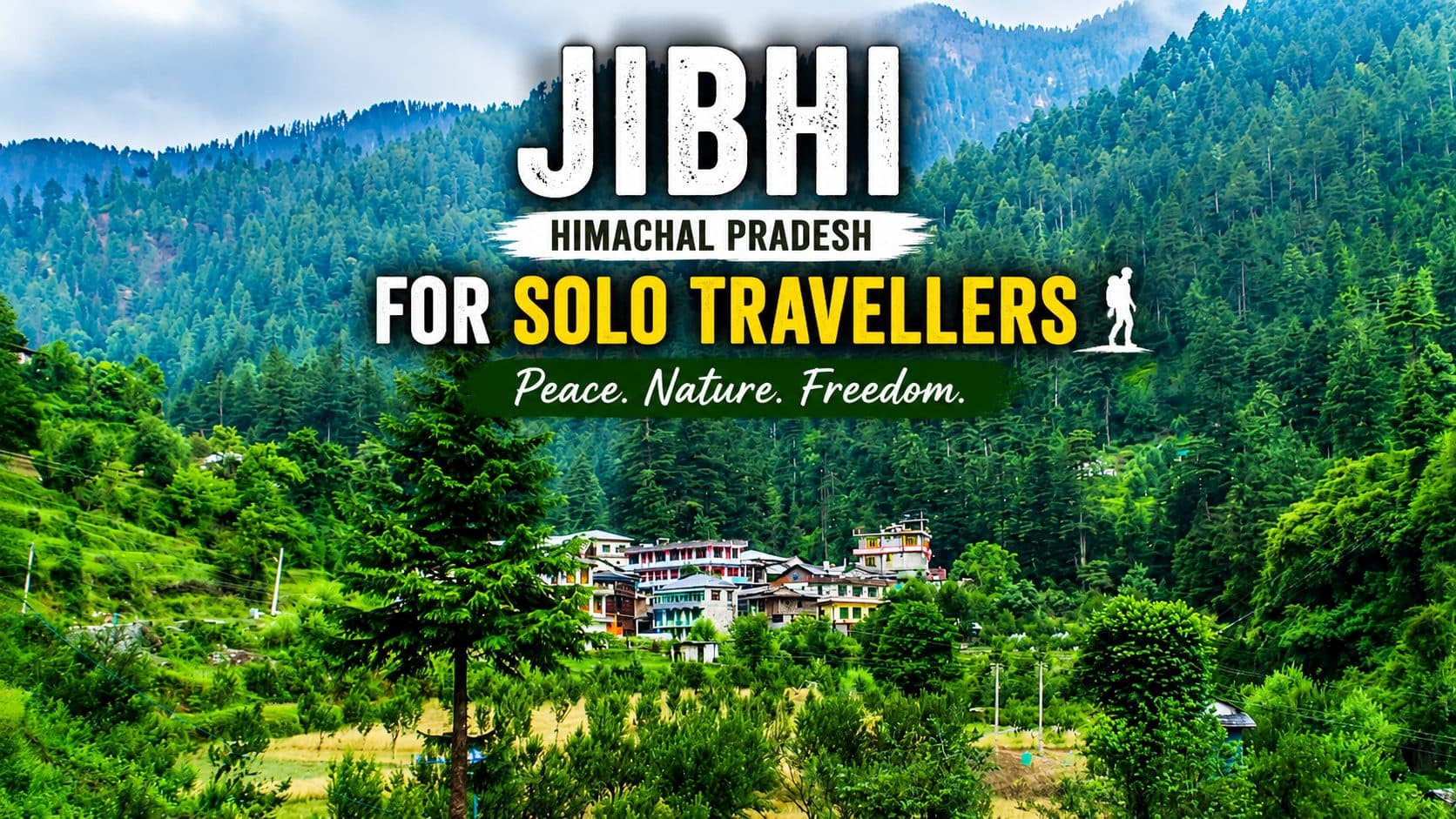
Jibhi is a small hamlet in the Banjar Valley of Himachal Pradesh has quietly become one of India's best-kept secrets for solo travellers. Not because it has the best trekking (though it does have that). Not because it's Instagram-famous (though it's getting there). But because it's one of those rare places that's perfectly calibrated for people travelling alone — safe, social when you want it, solitary when you don't, and easy on the wallet.
Here's everything you need to know before you go.
Why Jibhi Works So Well for Solo Travel
Most hill stations in India cater to groups — families, couples, big friend squads. Jibhi is different. The vibe here is distinctly slow-travel. Cafés are built for lingering. Homestay hosts actually talk to you. Fellow travellers are the kind who strike up conversations over breakfast and share trek tips without being asked.
Jibhi is also genuinely safe. Locals are warm and helpful, and the village hasn't yet been swallowed by the aggressive commercialisation that comes with mass tourism. That said, as the place grows in popularity, keep your guard up in the usual ways — don't flash expensive gear, trust your instincts, and don't let anyone sell you a "guided experience" you didn't ask for.
For solo women travellers specifically: Jibhi is widely considered one of the safer Himachal destinations. The homestay culture means you're almost always surrounded by a host family rather than left alone in an anonymous hotel.
Getting Here: The Solo Traveller's Route
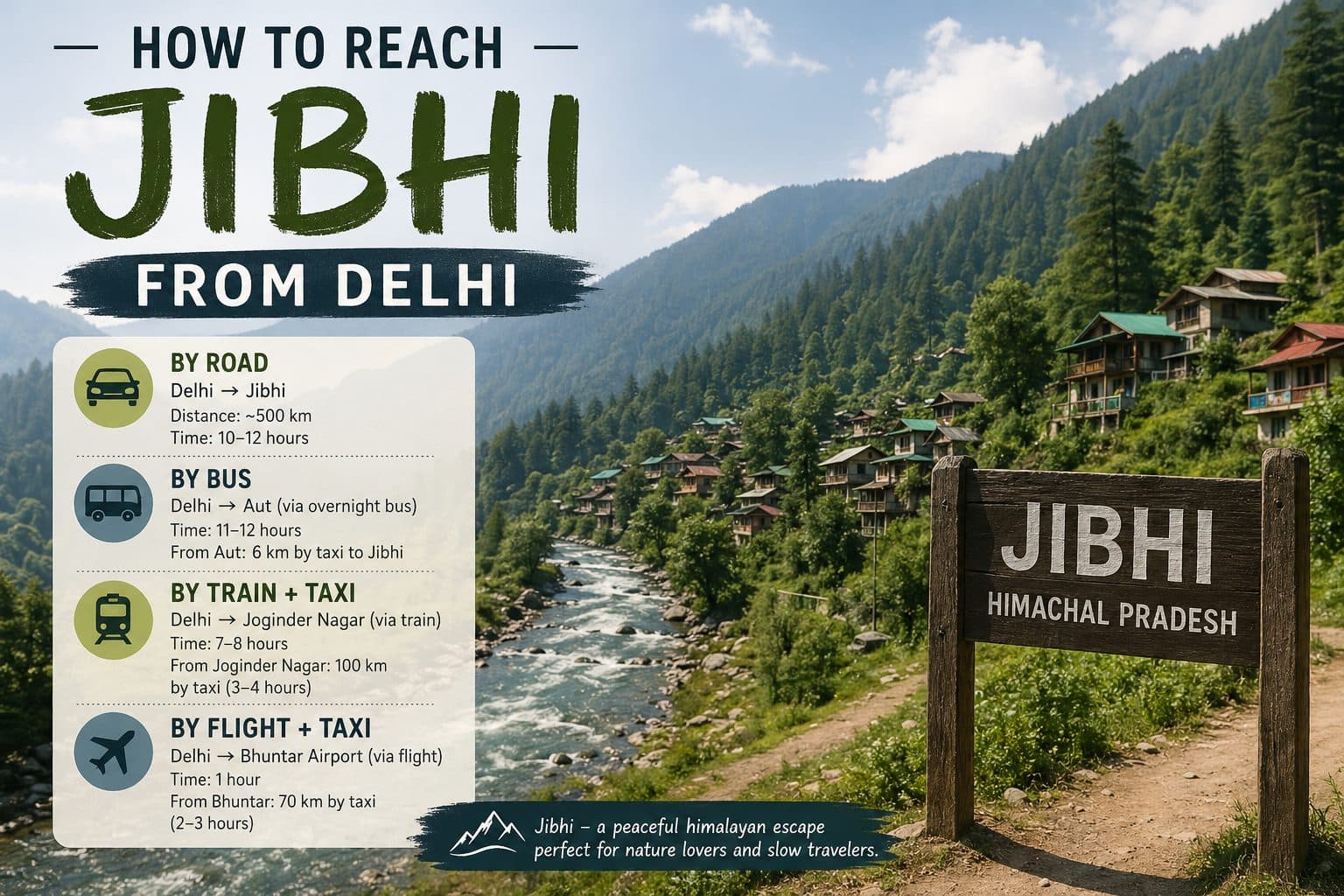
From Delhi: Take an overnight HRTC or private bus from Kashmiri Gate ISBT towards Manali. Get off at Aut — this is the key junction. The bus ticket costs ₹700–₹1,000 depending on the service.
From Aut, take a local bus to Banjar (<₹100), then another to Jibhi (₹30–40). If you're lucky, you'll catch a direct bus from Aut to Jibhi for around ₹120.
Or, splash out ₹1,500-₹2,000 on a taxi from Aut to Jibhi — worth it if you're arriving late or exhausted and just want to get there.
From Chandigarh: About 265 km. Same route via Aut.
From Manali: Only about 100 km. Take a bus to kullu and from kull bus to banjar or jibhi.
Pro tip: The journey from Aut to Jibhi is half the experience. Winding mountain roads, the Tirthan river appearing and disappearing beside you — don't sleep through it.
When to Go
April to June is the sweet spot for most solo travellers. Temperatures hover between 15–25°C, the passes are open, Serolsar Lake and raghupur fort are accessible, and café culture is in full swing.
July to September (Monsoon): The valley turns absurdly green and lush. But roads can get slippery and landslides are a real concern. Travel with buffer days, don't rush, and the reward is a Jibhi very few people see.
October to November: Crisp air, fewer crowds, golden foliage. Arguably the best time to visit if you want peace and good trekking conditions.
December to February: Snowfall at higher elevations like Shoja and Jalori Pass. Jibhi itself gets occasional snow. It's cold, atmospheric, and magical.
Where to Stay: Picking Your Base Camp
Solo travellers have good options across every budget:
Budget (under ₹800/night): Dorm beds in backpacker-friendly homestays are your best bet. The communal atmosphere is great for meeting other travellers. Look for places like Rudrani Stays & Café — clean, affordable, and social. Some dorm beds go for as low as ₹400–500/night.
Mid-range (₹1,200–₹2,500/night): Cosy wooden cottages and family-run boutique stays. This is where Jibhi really shines. You get the authentic Himachali wooden architecture, proper meals cooked by the host, and a real sense of place.
Splurge (₹3,000+/night): Treehouse stays in and around the Tandi area, or boutique properties like Winterfell Jibhi (winterfelljibhi.com) — a beautifully designed stay that feels like you've walked into a mountain novel. Worth it for a night or two if you want to treat yourself.
General advice: Book in advance during peak season (April–June, October). Don't show up hoping to wing it in a shoulder-season weekend — Jibhi's capacity is genuinely limited.
What to Do: The Real Solo Traveller Itinerary
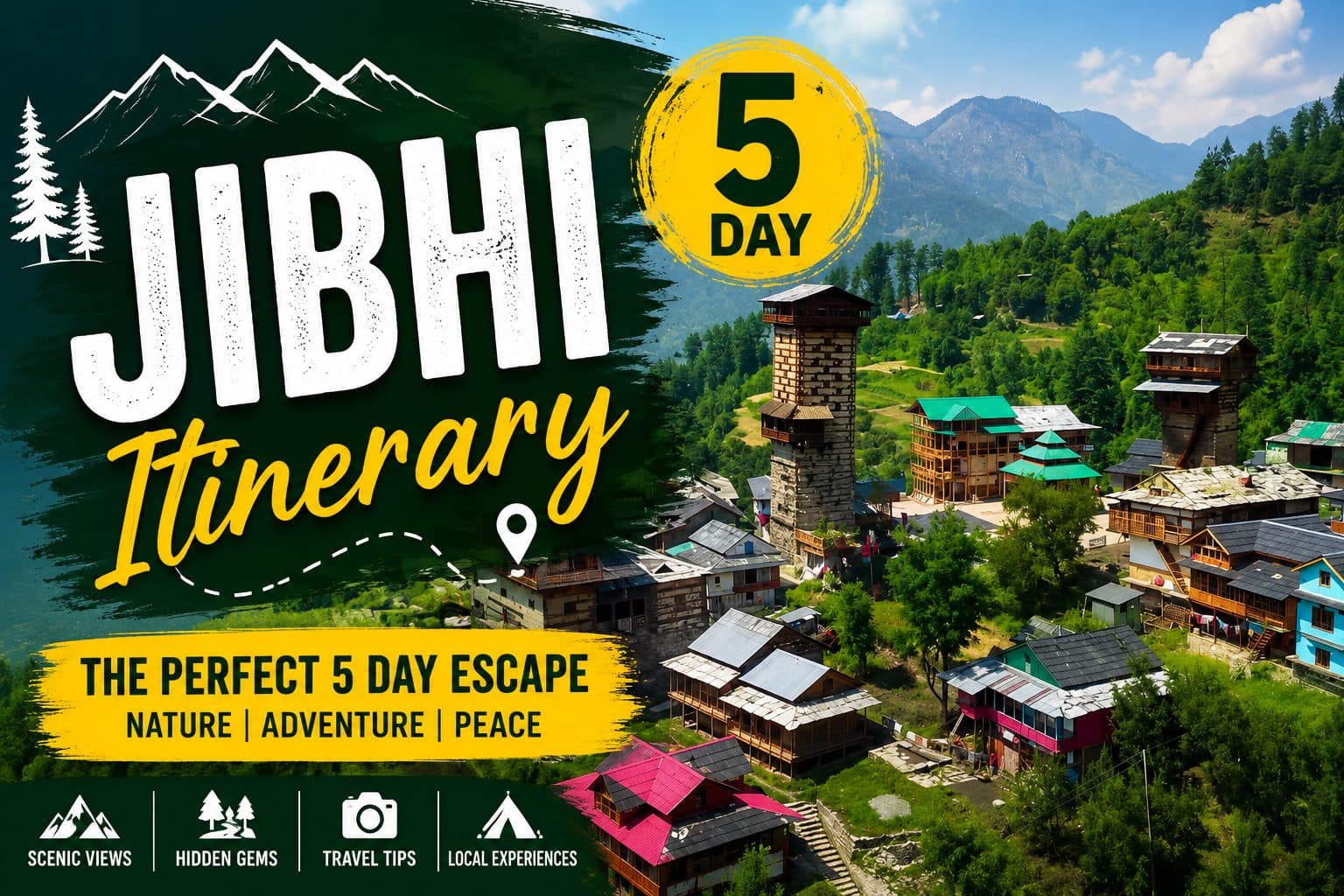
Day 1 — Arrive, Breathe, Explore on Foot
Resist the urge to plan everything immediately. Drop your bags, walk to the Jibhi Waterfall (15–20 minutes from the main road through a forest trail), cross the wooden bridges, feel the spray. Come back. Find a riverside café. Sit.
In the evening, explore the village lanes on foot. Jibhi is best discovered slowly — you'll find photogenic spots, quiet temples, and little viewpoints that no map will show you.
Day 2 — Jalori Pass & Serolsar Lake Trek
This is the big one. Hire a local taxi to Jalori Pass (about 45 minutes from Jibhi, ~₹800–1,000 return). At 3,140 metres, the pass has sweeping Himalayan views that hit differently when you've earned them on foot.
From the pass, the trail to Serolsar Lake is 5 km each way through dense oak and pine forest. Flat, doable, hauntingly beautiful. The lake is sacred — locals say birds actively keep it clear of leaves. There's a small temple to Budhi Nagin (Goddess of Snakes) at the edge. Average person covers the round trip in 4–5 hours.
Trek remains closed January to March due to snowfall blocking the path.
Raghupur Fort is another trail option from Jalori Pass — less crowded than Serolsar, open meadows, wildflowers, 360° Himalayan views. Worth it if you want solitude.
Day 3 —Balo Temple, Mini Thailand, Tandi Village & Slow Days
Balu Nag Temple also know as Balo Temple sits in Bahu village, 9 km from Jibhi on the Gadagushaini road. It is a kath-khuni shrine — the traditional Himachali building technique of interlocking wood and stone without mortar — built centuries ago according to local oral history. The surroundings are dense, green, and genuinely quiet. Very few visitors find it.
Mini Thailand (locally called Kuli Katandi or Veer ki Aar) is a hidden natural wonder — massive rocks forming a cove around a turquoise pool. The water is clean, cold, and crystal clear. You can swim. Rent a scooty from the Jibhi main market (₹500–700/day) for the day — it's that kind of adventure.
Above Jibhi, Tandi village sits on a ridge with incredible views. The road is steep and narrow — not for the faint-hearted, but the serenity up there is worth it. Tandi is also where you'll find the treehouse stays.
If you have an extra day — and you should plan for one — just stay. Walk the village. Try trout fishing in the Tirthan River (get a permit locally, ~₹300). Visit Chaini Kothi, a historic tower village with ancient architecture unlike anything else in the valley.
Optional: Great Himalayan National Park (GHNP)
Entry to the GHNP requires a permit (₹200 for Indian nationals) and is best combined with a guide. If you're into serious nature and biodiversity, the park's trails offer encounters with rare Himalayan wildlife and pristine forest. Check with your homestay host for current permit requirements and guide contacts.
Eating in Jibhi: The Solo Traveller's Food Guide
Jibhi's café scene is genuinely one of its best features.
Must-eat Himachali dishes:
Siddu — steamed bread stuffed with walnut, poppy seeds, or spinach, eaten with ghee and chutney. Life-changing.
Rajma Chawal — the Himachali version is different and better than anything you've had before.
Fresh Trout — caught locally from Tirthan River. Grilled, simply spiced. Order it wherever it's on the menu.
Sepu Vadi — lentil dumplings in curry. A winter staple.
Dham — a traditional Himachali feast served at local festivals. If your stay overlaps with one, don't miss it.
Café culture: Most cafés in Jibhi have riverside seating, cosy interiors, and menus that bridge Himachali food with traveller staples (momos, pasta, maggi, fresh coffee). Pink House Café and Rainbow Café are popular spots. Cafés typically close by 9 PM — plan accordingly.
Budget: ₹300–600/day for food if you eat local. Up to ₹800–1,000 if you're café-hopping frequently.
Practical Stuff: The Bits That Actually Matter
Connectivity: Jio , Airtel and BSNL works best in Jibhi. Airtel is decent. Vi is unreliable here.
Cash: ATMs exist in Banjar (8 km away) and occasionally in Jibhi itself. Carry ₹3,000–5,000 cash before arriving. UPI works at many places, but don't count on it everywhere.
Getting around locally: Scooty rental is the best way to explore (₹500–700/day) apart from Jalori pass visit . For Jalori pass Visit rent good bike or hire private cab .HRTC buses are available but infrequent — check timings with your host.
What to pack:
Warm layers even in summer — mornings and nights are cold
Trekking shoes (non-negotiable if you're hitting Jalori Pass)
A rainproof jacket year-round
Sunscreen (altitude intensifies UV)
First-aid kit if you're trekking solo
The Honest Truth About Jibhi
Jibhi is changing. Social media has found it. The café count is growing. More properties are coming up each season. It's not the secret it was five years ago.
But it still has something most popular hill stations have completely lost: the feeling that you can just be here without an agenda. That you can sit by a stream and watch the water and nobody is going to try to sell you something or shuffle you along.
For solo travellers especially, that's rare. And worth protecting.
Go before it's fully discovered. Stay a few days longer than you planned. Walk places you didn't put on a list.
Jibhi will meet you wherever you are.
Got questions about Jibhi? The best resource is your homestay host — they know things no blog ever will.