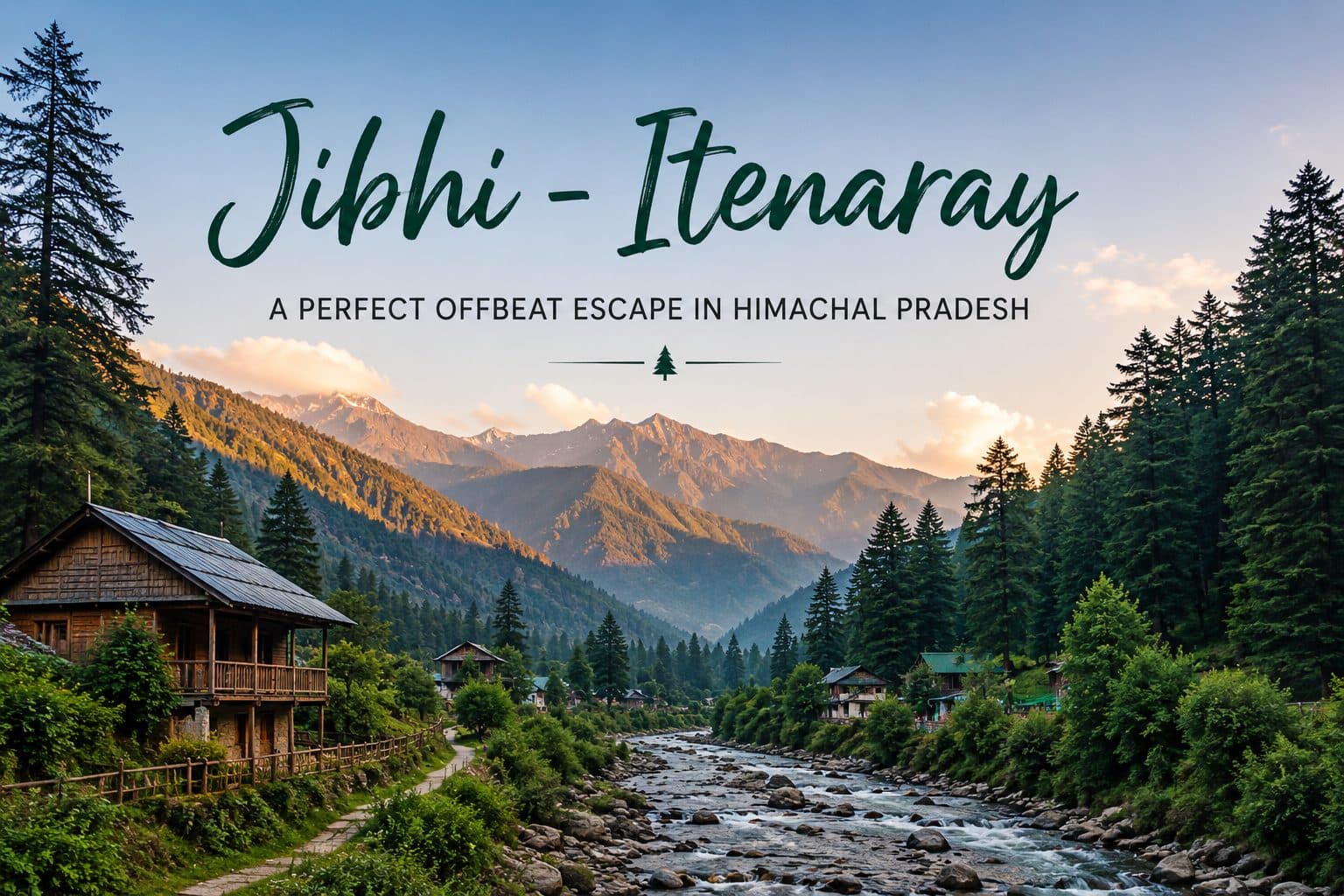
Three days in Jibhi is enough to understand why people extend their stay. You arrive expecting a quiet Himachal village and leave wondering why streams sound louder here, why mornings feel slower, and why city time seems to stop working after the first evening.
This 3 day 2 night Jibhi itinerary is built for real travel pace — not a rushed checklist. It covers everything worth doing on a first trip: the waterfall walk, Mini Thailand, Jalori Pass, your choice of Serolsar Lake or Raghupur Fort, and the Tirthan Valley stretch on the way home. It includes drive times, walking effort, food stops, and what to skip if weather turns bad.
If you are coming from Delhi, Chandigarh, or anywhere in the plains, this is the most balanced first trip you can plan here. Three days done right leaves you wanting four — which is probably the honest endorsement Jibhi deserves.
Jibhi sits in the Tirthan Valley of Himachal Pradesh, about 500 km from Delhi. It is quieter and slower than Kasol or Manali, and that is not a compromise — it is the point. Most visitors arrive comparing it to somewhere else and leave thinking of it on its own terms.
A note on Jalori Pass and winter access: Jalori Pass (3,120m) is part of this itinerary and can close after heavy snowfall between December and March. If you are planning a winter trip, confirm road conditions before departing — the Aut-side route to Jibhi stays open year-round, but the pass itself is weather-dependent. Day 2 of this itinerary can still work in winter with adjusted expectations.
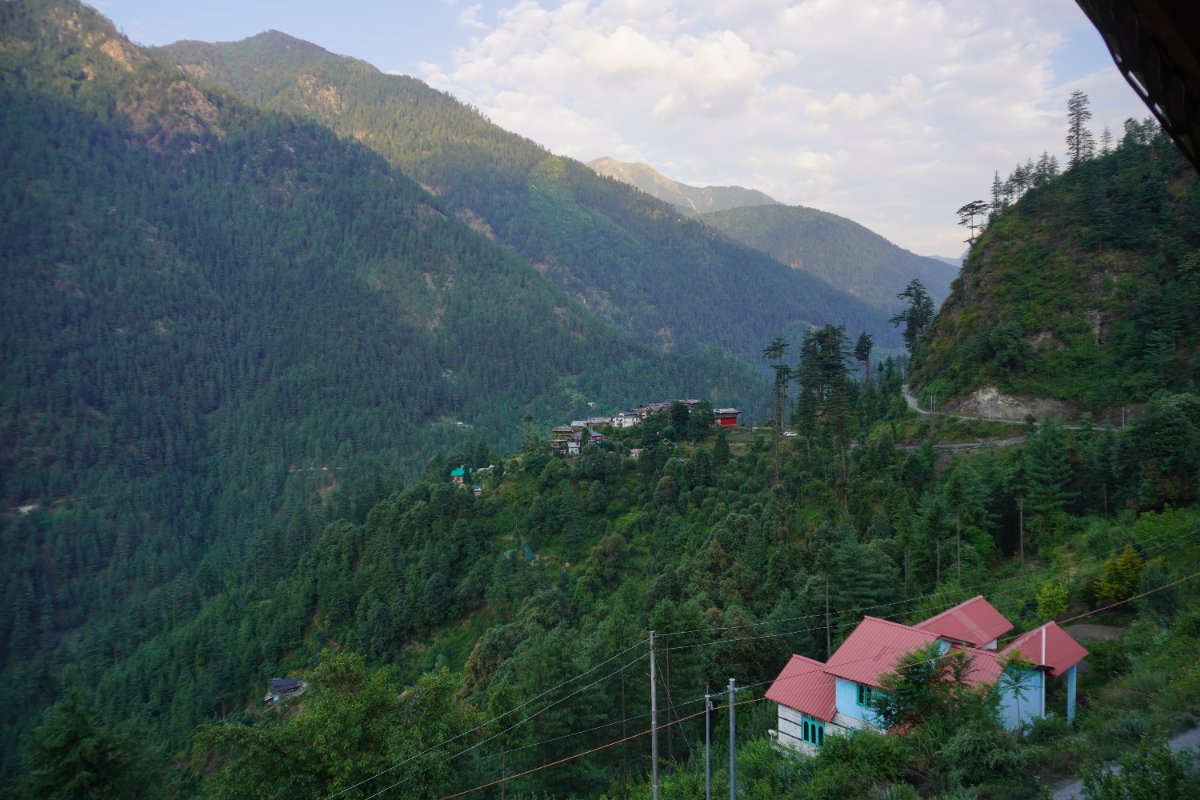
Image : View of village from a reehouse in jibhi
Who This Itinerary Is For
This plan works for most first-time visitors to Jibhi — but it helps to know which type of traveller it suits best, and where it may need adjusting.
Weekend travellers from Delhi or Chandigarh. This itinerary is built around a Friday night departure and a Monday morning return — the standard Jibhi weekend. The timings on Day 3 are specifically structured for overnight bus travellers returning from Aut.
Couples and small groups of friends. The pace is designed for two to four people who want a mix of activity and rest — not a solo backpacker’s speed run and not a large group tour. The stay options and café evenings work especially well for this group.
Families with older children. Mini Thailand, the waterfall walk, and the Jalori Pass viewpoint are all manageable for children above 8–10 years. The Serolsar Lake option on Day 2 is better for families than Raghupur Fort, which has steeper sections. The itinerary does not require any technical gear or prior trekking experience.
People who want to slow down, not just sightsee. Jibhi is not a destination you tick off a list. This itinerary keeps Day 1 deliberately unhurried and builds in proper rest time. If your idea of a good mountain trip involves coffee with a valley view and no particular plan for the afternoon, this place — and this itinerary — suits you.
This itinerary may not suit you if: you want nightlife, shopping, or a packed sightseeing list. Jibhi has none of those things. It also may not work if you only have two days — in that case, prioritise Day 2 and skip Tirthan Valley on Day 3.
Quick Overview
Detail | Info |
Trip Length | 3 Days / 2 Nights |
Best For | Couples, friends, families, first-timers |
Base Stay | Jibhi village or Tandi |
Main Highlights | Jalori Pass, Serolsar Lake or Raghupur Fort, Mini Thailand, Jibhi Waterfall, Tirthan Valley |
Best Season | March–June, September–November |
Walking Level | Easy to Moderate |
Budget (per person) | ₹4,000–10,000 depending on stay and transport |
Day 1 — Arrive, Settle, and Let the Village Work on You
Most people reach Jibhi by afternoon after a long overnight drive or early morning bus drop at Aut. The road from Aut to Jibhi alone — 35 km along the Tirthan River — does something to the mood. By the time you check in, the hurry that left with you from the city has mostly dissolved.
Do not plan anything heavy on Day 1. The best first move is to drop your bags, eat something warm, and step outside.
Afternoon — Jibhi Waterfall Walk
After settling in, head to the Jibhi Waterfall — a short walk from the main market area. The path crosses small wooden bridges, passes through moist forest, and arrives at a compact waterfall tucked in a green pocket. It is not a spectacular waterfall by mountain standards, but the trail is genuinely pleasant: cool, damp air, the sound of water before you see it, and almost no one around if you go on a weekday afternoon.
Go in late afternoon when the light is softer. Time: 20–30 minutes return.
Late Afternoon — Mini Thailand (Kulhi Katandi)
From the waterfall area, make your way to Mini Thailand — locally known as Kulhi Katandi. This is a stretch of the Tirthan river where water moves over flat rocks and collects in shallow turquoise-green pools between boulders. The name sounds like an exaggeration until you actually see the water colour on a clear day.
It is a short walk from the road — under 2 km. Wear shoes you do not mind getting wet. The best time to visit is afternoon when the sun hits the water directly. Go on a weekday if possible — on peak summer weekends it gets crowded and loses most of what makes it worth visiting. Time: 45–60 minutes. Monsoon note: After heavy rain, water levels at Mini Thailand rise fast and the access path becomes slippery. Check with your host or locally before walking down — the pools can be unsafe to enter when levels are high.
Evening — Village, Café, and the First Quiet Night
Walk back through the village as evening comes in. A few cafes worth knowing: The Pink Panther has a good terrace and a relaxed vibe that suits a first evening well. Polka Cafe is small and popular — go early or expect a wait on weekends. Cafe Bleeblu is worth stopping at if you want something with a forest feel rather than a market view. For a fuller meal in a quieter setting, Jungle Valley sits slightly off the main road and gets less foot traffic. Order chai, sit outside, and watch the valley go quiet. Jibhi evenings go still very quickly after sunset. The temperature drops faster than most visitors expect, even in May. People who arrived in a t-shirt at noon are reaching for a jacket by 7 PM. Carry one.
If the sky is clear, step outside after dinner. There is almost no artificial light in this valley after 9 PM. On a clear night, the stars are the kind that make city people quiet for a moment.
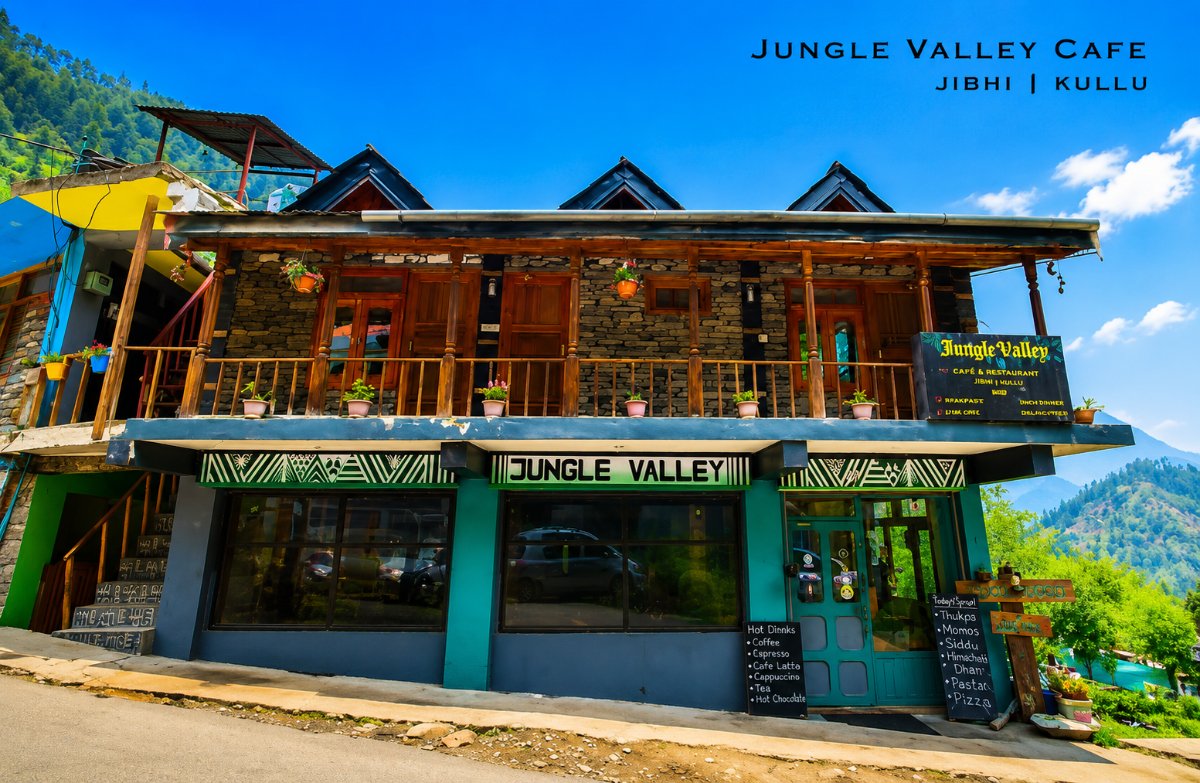
Image: Jungle Valley cafe jibhi
Day 2 — Jalori Pass: Pick Your Trail
Wake up early and leave your property by 8–8:30 AM at the latest. This is the most important instruction of the entire itinerary. Day 2 is the best day of the trip, and an early start at Jalori Pass is what separates a rushed afternoon from a proper mountain day.
Drive to Jalori Pass — approximately 20 km from Jibhi, about 45–60 minutes. The road climbs steadily through forest, with views widening as you gain altitude. At the top (3,120m), the air is noticeably sharper and cooler. Carry a jacket regardless of what the valley felt like at breakfast.
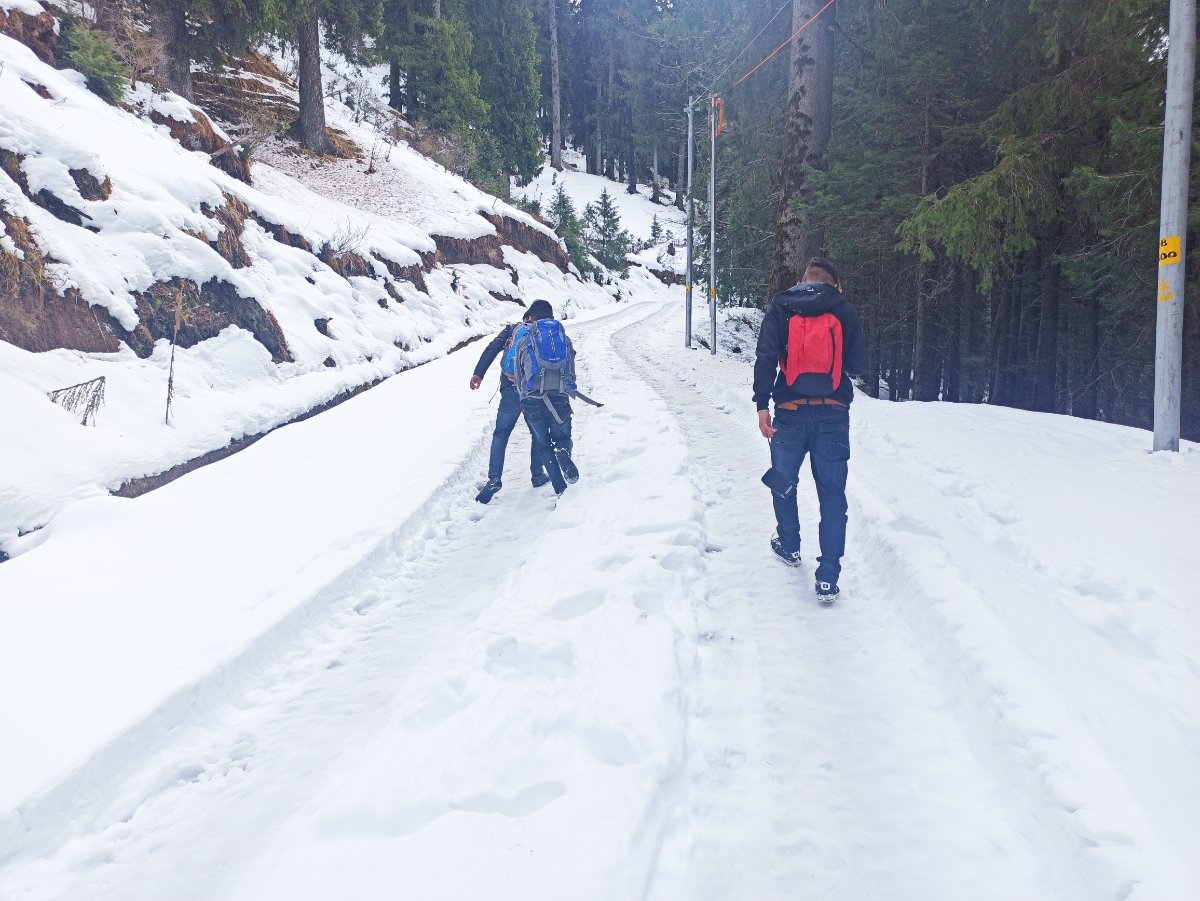
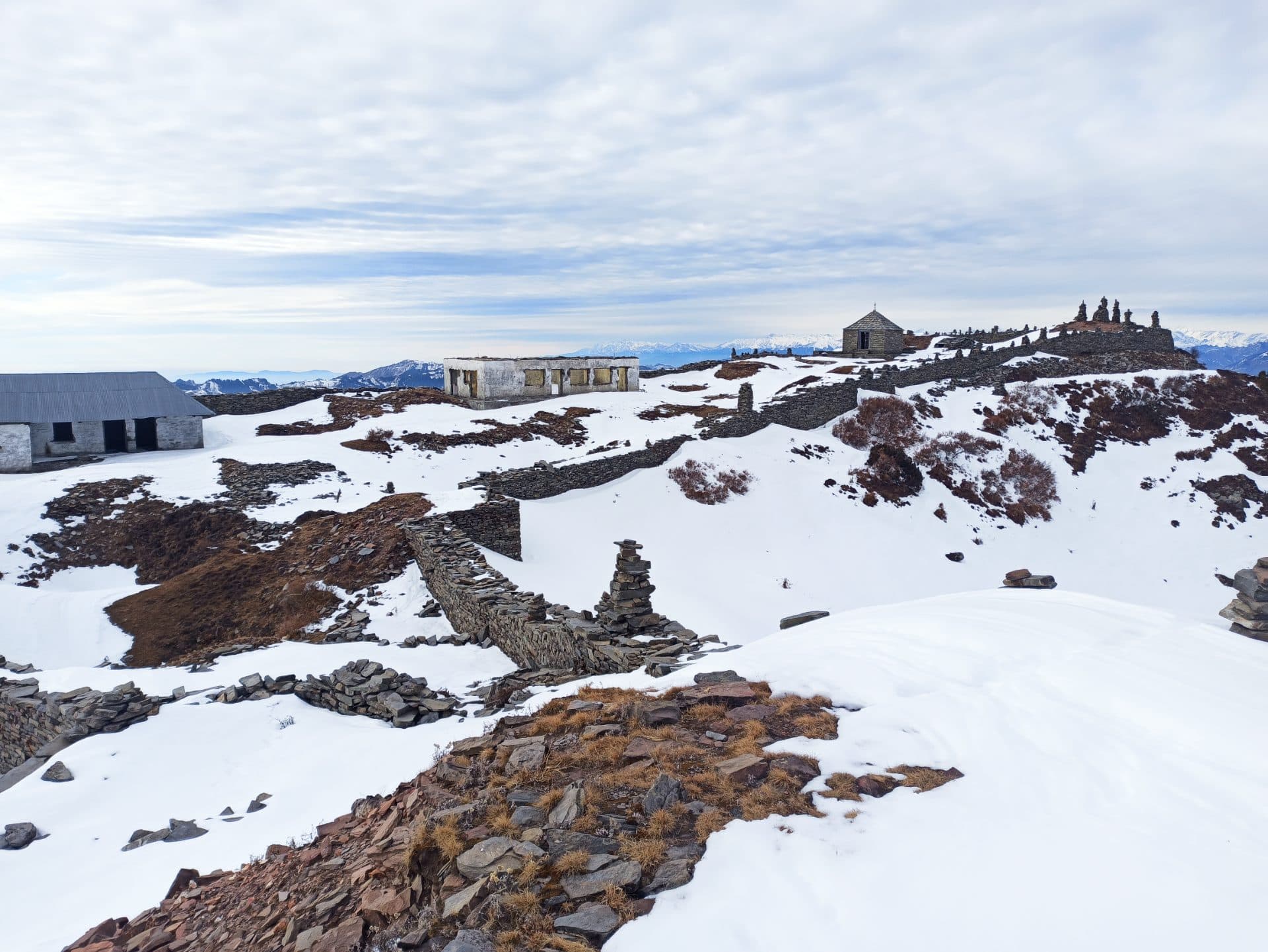
Image: Trekking from Sojha to Jalori Pass in winter
From Jalori Pass you have two trail options. Choose one. Most visitors cannot do both properly in a single day. A small number of experienced trekkers who start from Jibhi very early and reach the pass by 8 AM can cover both — but plan for one and treat the second as a bonus only if energy and time allow.
Trail Option A — Raghupur Fort Trek
The Raghupur Fort trail starts from Jalori Pass — 1.5 km to the ridgeline where the fort ruins sit. The walk takes about 45 minutes one way and gains altitude quickly, opening into one of the best viewpoints in this part of Himachal Pradesh: the entire Jibhi valley below, Tirthan and Kullu ranges on both sides, and Jalori Pass visible behind you. Total time including return and time at the top: approximately 2 hours.
Best for: those who want wide open panoramic views and a shorter, more rewarding climb. The more popular choice among first-time visitors.
Trek Detail | Info |
One Way Distance | ~1.5 km |
Time One Way | 40–60 minutes |
Difficulty | Moderate (steep sections) |
Trail Type | Forested ridge climb |
The fort itself is a historic watchtower — the remains of a structure used by Mandi rulers to monitor the pass. What brings people here is the view, not the ruins. Stand on the ridgeline on a clear morning and the whole valley is spread below.
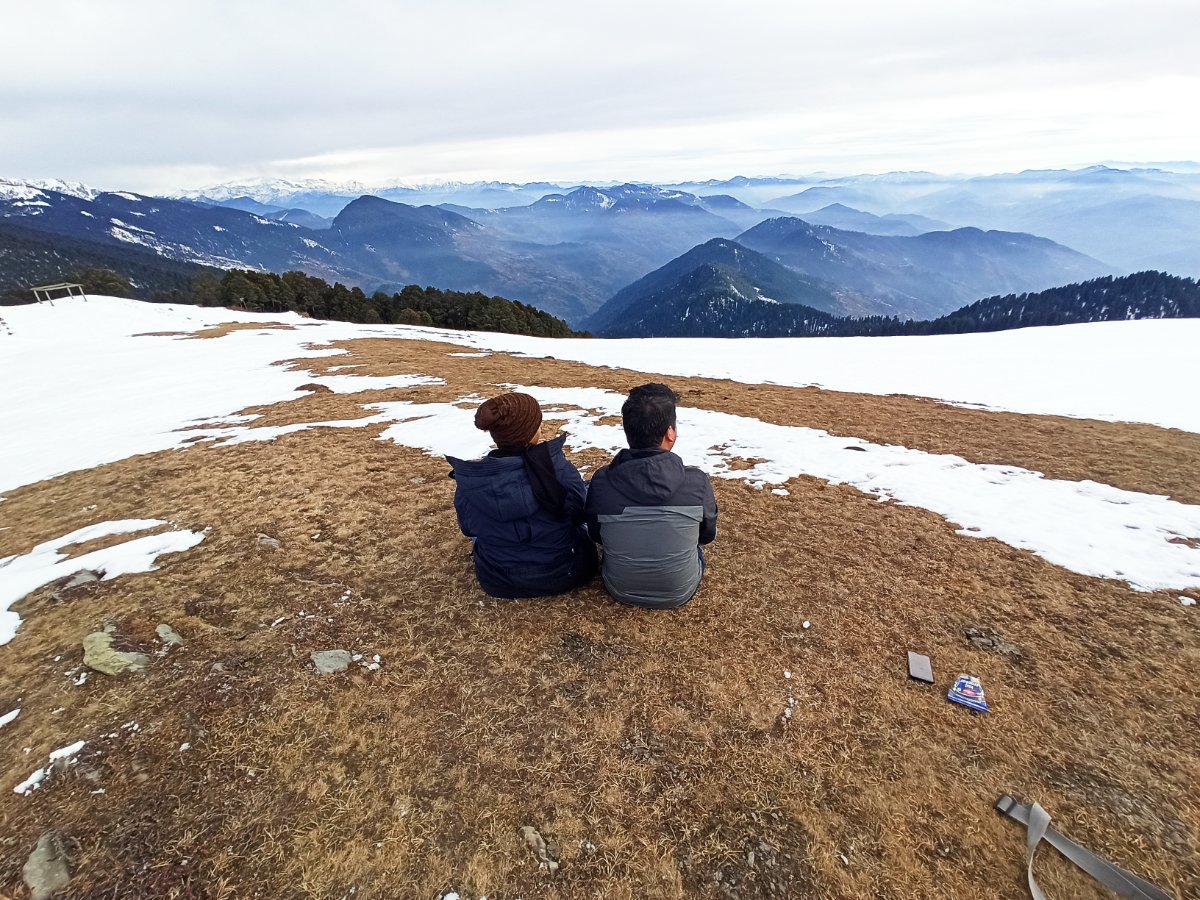
Image: 360 view from raghupur fort
Full trek guide with history, trail detail, and tips: Raghupur Fort Trek from Jalori Pass — Complete Guide
Trail Option B — Serolsar Lake Trek
The trek to Serolsar Lake also starts from Jalori Pass and runs 4–5 km one way through oak and rhododendron forest. The trail is gentle — no steep technical sections — and the forest is the experience as much as the destination.
Best for: those who want a peaceful forest walk to a calm alpine lake. Less dramatic views, more meditative experience.
Trek Detail | Info |
One Way Distance | ~4–5 km |
Time One Way | 1.5 to 2.5 hours |
Difficulty | Easy to Moderate |
Trail Type | Forest path, gradual ascent |
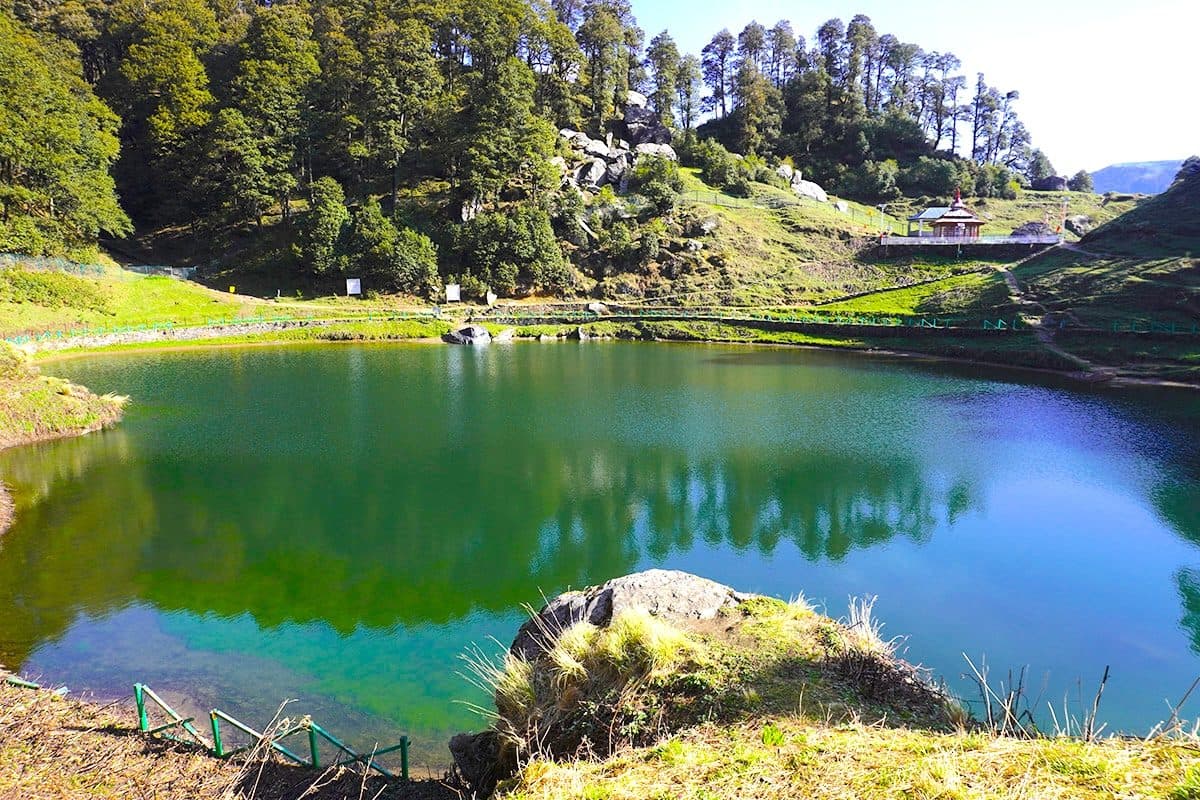
The lake appears at the end of a gradual clearing — calm, circular, surrounded by trees on all sides. The Budhi Nagin temple at the lakeside is a local religious site. Spend time at the lake rather than rushing a photo and turning back. On still mornings, the pine smell from the forest behind the temple is one of those details you remember later without expecting to.
Altitude note: The lake sits at around 3,100m. If you are coming directly from a low-altitude city, this is enough to slow your pace noticeably. Drink water steadily from the start of the trek, not just when thirsty. Take the first half slowly — most people who struggle on this trail pushed too hard in the first 30 minutes. The return is always easier than the climb.
Mobile network: Signal drops at Jalori Pass and disappears almost entirely on the Serolsar trail.
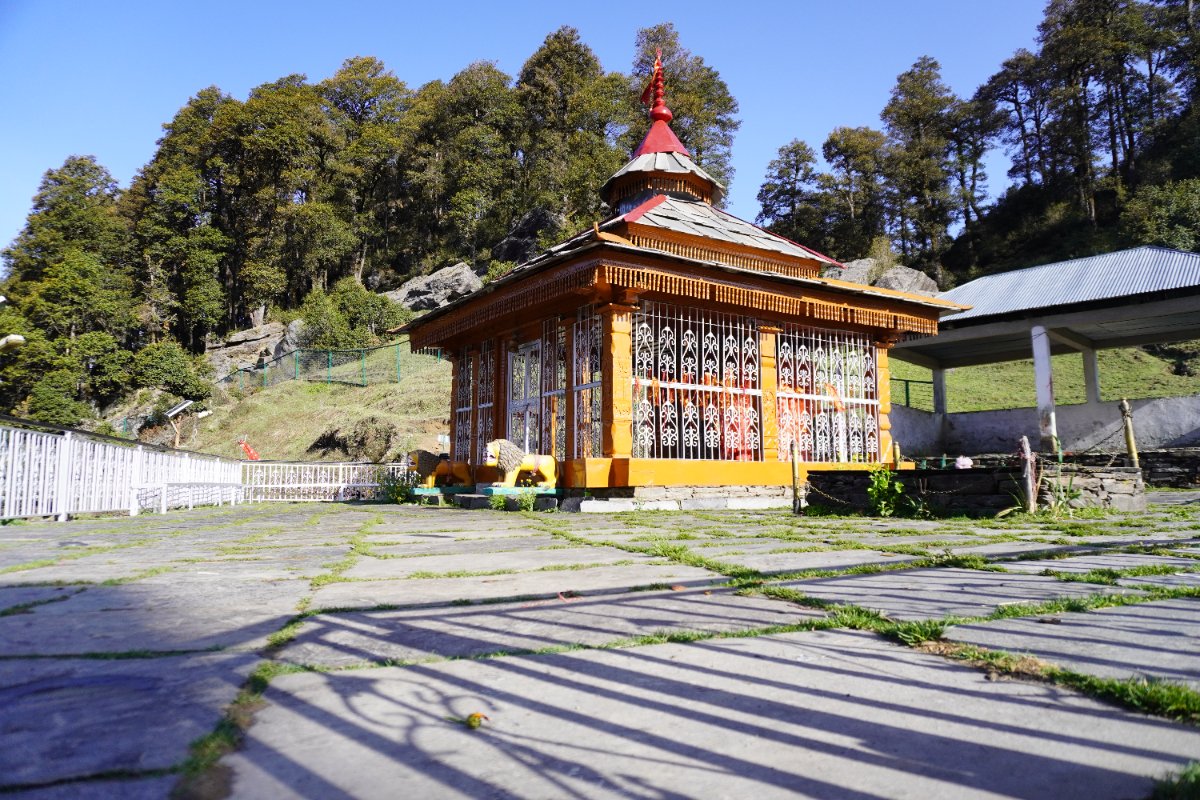
Image: Mata budhi nagin temple at serolsar
Full trek guide with distance, trail map, and what to carry: Serolsar Lake Trek from Jibhi — Complete Guide
Can You Do Both in One Day?
A small number of visitors cover both Serolsar Lake and Raghupur Fort in the same day — but only under specific conditions: experienced trekkers, departure from Jibhi by 7 AM, at Jalori Pass by 8 AM, and comfortable with 4–5 hours of walking. If that describes you, it is possible. For most first-time visitors, it leads to a rushed lake, a rushed fort, and an exhausted evening.
Pick one. Do it properly.
Return to Jibhi
Back at Jalori Pass by evening, drive down to Jibhi. The descent feels faster than the climb. Keep dinner simple — there are small dhabas near the Jibhi market that do a good thali. Rest early. The legs will feel it, and that is not a complaint — it means Day 2 went well. This day tends to be the memory people hold onto longest from the trip.
Day 3 — Check Out Early and Return Through Tirthan Valley
Checkout day, but not wasted.
Leave your property by 9–10 AM at the latest. An early departure from Jibhi gives you 4–5 good hours in the Tirthan Valley before reaching Aut for your return bus or taxi.
Tirthan Valley on the Way Home
The road from Jibhi back to Aut follows the Tirthan River — and the valley itself has stops worth making.
GHNP Entry Zone (Great Himalayan National Park): The buffer zone entry near Gushaini is a short drive from Jibhi. Even without trekking into the park, the entry area along the river is scenic and worth stopping at.
Chhoe Waterfall and Riverside Spots: Several small waterfalls and flat river sections dot the Tirthan Valley road. Ask locally for the current best spot — these change by season with water levels.
Timings that work: - Depart Jibhi by 9–10 AM - Tirthan Valley stops: 10 AM – 2 PM - Reach Aut by 4–5 PM - Return buses for Delhi and Chandigarh from Aut: typically 6 PM – 10 PM (overnight services)
For bus travellers: The taxi taking you to Aut passes through Tirthan Valley on the way — ask the driver to stop. You can comfortably reach Aut by 5–6 PM, which works perfectly for any overnight return bus. Important: The road near the Aut tunnel can see significant traffic buildup on Sunday evenings when weekend travellers from Manali and Kasol are all heading back simultaneously. A 5 PM arrival at Aut is safer than a 6 PM one. Do not cut it close on a Sunday.
If you have an early return bus (before 5 PM from Aut): skip the Tirthan Valley detour and go straight. Do not rush these stops.
Best Version of This Itinerary by Season
March to June: Best weather, green landscapes, Jalori Pass open. Crowds on weekends — book accommodation 3–4 weeks ahead.
July to August: Forest is lush, waterfalls run full. Road conditions can be unpredictable after heavy rain. Mini Thailand water levels may be too high for safe access. Check before departing.
September to November: Post-monsoon clarity, fewer crowds, spectacular foliage by October. Best overall season. Cold evenings from October onwards.
December to February: Jalori Pass may close with heavy snowfall. Serolsar Lake and Raghupur Fort may not be accessible. Jibhi village stays reachable. Best for those who want snowfall views and complete quiet — confirm road conditions before planning.
Practical Tips
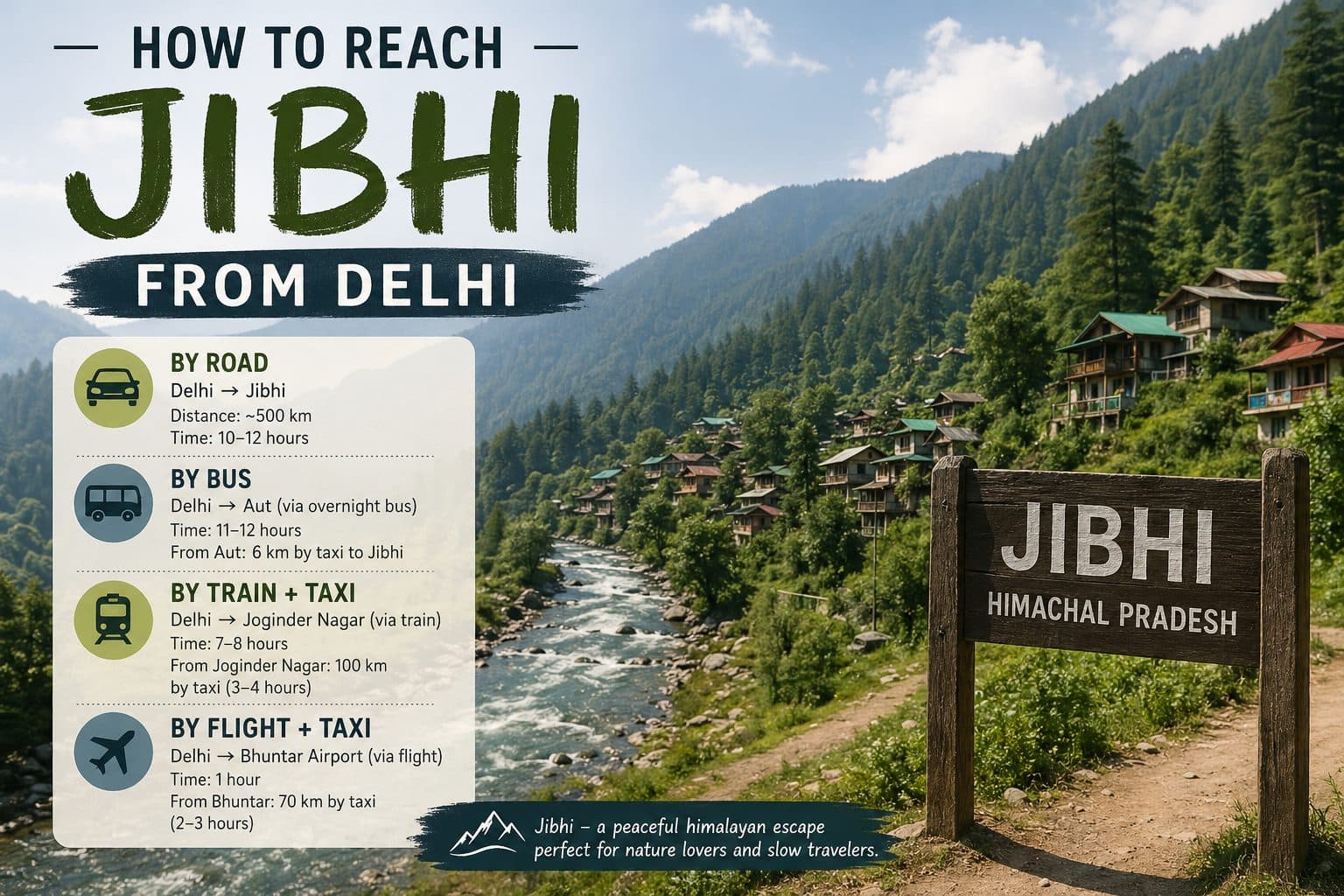
Leave Delhi by 9–10 PM to reach Jibhi by 9–11 AM the next morning with the full Day 1 ahead.
Carry cash — last ATM is in Banjar, 10 km before Jibhi. Jibhi has none. Withdraw ₹3,000–5,000 per person minimum.
Jio works best across Jibhi and Tirthan Valley. Airtel drops frequently. Download offline maps before leaving the city.
Light jacket always — evenings and mornings at Jibhi and Jalori Pass drop significantly even in May. The pass itself can be cold in any season.
For treks: wear shoes you can walk 8–10 km in comfortably. No technical gear needed for either trail.
Book return transport in advance — particularly if leaving on a Sunday from Aut. Buses fill up and last-minute taxis are hard to find on peak evenings.
Payments: UPI works at most cafes and small shops in Jibhi market. Beyond the village, assume cash only. Cards are not reliably accepted anywhere in this area.
Approximate Costs for a 3 Day Jibhi Trip
These are per person estimates based on typical 2026 rates. Costs vary by group size, season, and stay type.
Item | Budget | Mid-range |
Delhi–Aut bus (one way) | ₹600–800 | ₹900–1,400 (Volvo) |
Aut to Jibhi taxi | ₹1,000–1,500 (vehicle) | ₹1,000–1,500 (vehicle) |
Stay per night (per room) | ₹1,200–2,500 | ₹3,500–7,000 |
Meals per day (per person) | ₹300–500 | ₹600–1,000 |
Jalori Pass taxi (Day 2, vehicle) | ₹1,500–2,000 | ₹1,500–2,000 |
Total 3 days (per person, shared cab) | ₹3,500–5,000 | ₹7,000–12,000 |
Things Visitors Should Know Before Arriving
The roads are narrow. From Aut onward, the road to Jibhi is a single-lane mountain road in many stretches. Two vehicles passing each other requires one to reverse or pull aside. This is normal here — local drivers know every bend. If you are driving yourself for the first time, go slowly and avoid night driving. The road is not dangerous if you respect its pace.
Jalori Pass in rain and fog. The road to Jalori Pass becomes genuinely difficult in fog or active rain. Visibility drops, the road narrows further near the top, and some sections become slippery. If Day 2 morning looks wet, wait an hour or two before deciding. The pass is worth doing right — not worth rushing in bad conditions.
ATM access is limited. The last reliable ATM is in Banjar, 10 km before Jibhi. The one ATM in Jibhi market works inconsistently . Withdraw enough in Banjar — or better still, carry cash from Delhi or Chandigarh.
Temperature drops are real. A sunny 28°C afternoon in May can feel like 14°C after sunset. Evenings in Jibhi cool quickly regardless of season. Jalori Pass at 3,120m is cold even in summer mornings. Pack a proper layer — not just a light shirt.
The river sounds at night. If your property is streamside, the Tirthan River is audible through the night. This is not a noise problem — it is the thing most guests mention first when they check in the next morning. Streamside rooms run slightly colder; keep an extra blanket accessible.
Common Mistakes on a First Jibhi Trip
Arriving late at night. The mountain road from Aut to Jibhi after dark, if you are unfamiliar with it, is not comfortable. Time your departure from Delhi so you arrive at Aut by first light and reach Jibhi by mid-morning.
Overpacking the itinerary. The most common regret from Jibhi trips is not “I wish I’d done more” — it is “I wish I’d sat by the stream for longer.” Build real rest into the plan. The itinerary in this guide has one heavy day (Day 2) by design.
Skipping the early start for Jalori Pass. A 9:30 or 10 AM departure for Jalori Pass on Day 2 is too late. You will hit the pass at midday heat, rush the trek, and return to Jibhi without enough time to recover. Set the alarm. Leave by 8:30 AM.
Not carrying cash. Mentioned in Practical Tips but worth repeating: UPI works at the main cafes but nowhere else with reliability. The trek route has no UPI. Taxi drivers prefer cash. Carry ₹3,000–5,000 per person in notes before leaving Banjar.
Trying to do both treks. Serolsar Lake and Raghupur Fort are both on the same pass but they are separate trips. Doing both properly requires an extremely early start and good fitness. Most people who try this end up doing both poorly. Pick one. The other will still be there on the next visit.
Where to Stay in Jibhi for This Itinerary
The stay you book shapes this trip more than the itinerary does. The two main choices are Jibhi village and Tandi — and they suit different kinds of travellers.
Jibhi village suits travellers who want easy access to the waterfall, Mini Thailand, and the market cafes on foot. Good for first-timers who want the village experience close at hand, or those arriving late and needing to orient quickly.
Tandi sits about 6 km further up the valley — quieter, wider views, almost no road traffic. The tradeoff is a short drive or walk to reach the cafes and market. This suits couples or slow travellers who want to wake up to forest and river sound without any ambient noise from the road. If you are staying for the atmosphere as much as the sightseeing, Tandi is the better base.
If you are looking for a private cottage or treehouse stay in Jibhi — with a personal hot tub, standalone unit, and no shared guesthouse corridors — Winterfell Treehouse and Cottages has properties at both Jibhi village and the quieter Tandi location nearby. Tandi sits about 2 km further up the valley from the main Jibhi market, which makes it better suited for the kind of trip where you actually want to hear the stream and not the road. Rates from ₹4,500/night. Book directly at winterfelljibhi.com/contact or message on WhatsApp — we will confirm availability, answer questions, and help you pick the right unit before you decide. Arrival taxi from Aut can also be arranged if needed.
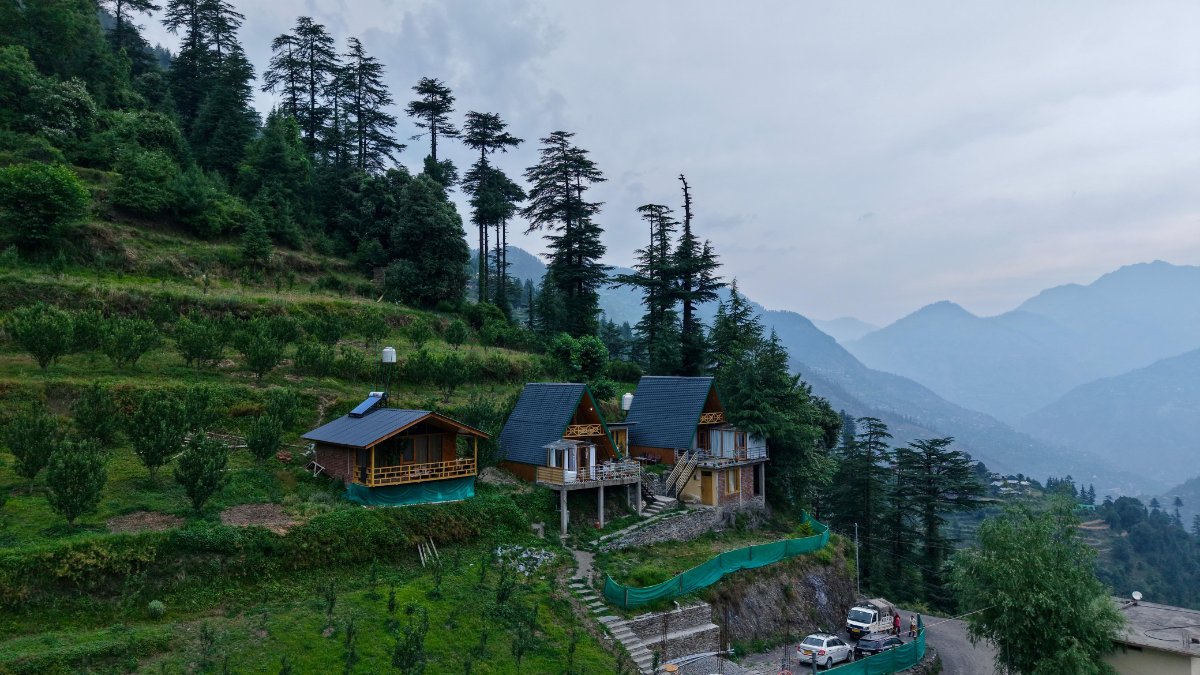
Image : winterfell treehouse and cottages jibhi
Frequently Asked Questions
Is 3 days enough for Jibhi?
Yes — three days is the ideal length for a first Jibhi trip. You can cover Jalori Pass, one of the two main treks (Serolsar Lake or Raghupur Fort), the Jibhi Waterfall, Mini Thailand, and still have a proper slow evening and a Tirthan Valley stop on the way back. Two nights feels rushed if you try to fit everything; four nights suits travellers who want both treks, cafe days, and a side trip to Shoja. Three days strikes the right balance for most first-timers.
Which is better — Serolsar Lake or Raghupur Fort?
They offer genuinely different experiences. Raghupur Fort is shorter, steeper, and ends with dramatic panoramic views of the full Jibhi valley — the most popular choice among first-time visitors. Serolsar Lake is a longer, more meditative forest walk ending at a calm alpine lake with a temple. If views and photography are the priority, Raghupur Fort. If a peaceful forest trek and lake setting matter more, Serolsar Lake. Both are excellent — most people who visit twice do the other one on the second trip.
Can I do this itinerary without a car?
Yes. Take an overnight bus from Delhi’s Kashmere Gate ISBT toward Manali and deboard at Aut. From Aut, hire a local taxi to Jibhi (₹1,000–1,500 for the vehicle). For Day 2, hire a local taxi for the full day to Jalori Pass (₹1,500–2,500 depending on stops). The same driver can drop you at Aut on Day 3 via Tirthan Valley. This is a completely workable approach for solo travellers and couples.
Is the Serolsar Lake trek hard?
No — manageable for anyone with average fitness. The trail is 4–5 km one way through forest with a gradual ascent. The altitude (around 3,100m at the lake) can slow people down slightly if arriving directly from low-altitude cities. Pace yourself on the first half and you will be fine.
Is the Raghupur Fort trek hard?
It is moderate — shorter than Serolsar Lake but steeper in sections. The 1.5 km climb gains altitude quickly and requires steady footing on the upper section. Most people in average fitness complete it without difficulty. Start early and you will be at the ridgeline before the day heats up.
How do I reach Aut from Jibhi for the return bus?
The road from Jibhi to Aut is 35 km and takes about 45–60 minutes by car. Local taxis from Jibhi to Aut cost ₹800–1,200 for the vehicle. If using this leg to see the Tirthan Valley, ask your driver to stop along the way. Most overnight return buses for Delhi and Chandigarh depart Aut between 6 PM and 10 PM — plan to reach Aut by 5–6 PM to have buffer time. On Sunday evenings, traffic near the Aut tunnel can add 30–45 minutes to journey time as weekend traffic from Manali and Kullu converges. Build this in and do not aim for a 6 PM arrival on a Sunday.
Is Jibhi suitable for families with children?
Yes, well-suited. Jibhi Waterfall, Mini Thailand, and the drive up to Jalori Pass are all manageable for children of most ages. For the Day 2 trek, Serolsar Lake is the better family option — it is longer but gentler, with no steep technical sections. Raghupur Fort has a steeper climb near the top that can be tiring for young children. The village environment is calm and unhurried, which suits family travel better than Jibhi’s busier neighbours like Kasol or Manali.
What is the best time of day to visit Mini Thailand?
Midday to early afternoon, when sunlight hits the water directly and brings out the turquoise colour that the place is known for. Morning visits are pleasant but the light angle is not ideal for the water colour. Avoid visiting on peak summer weekends if possible — the pools get crowded and lose most of their appeal. A weekday afternoon in April, May, or October is the best version of this place.