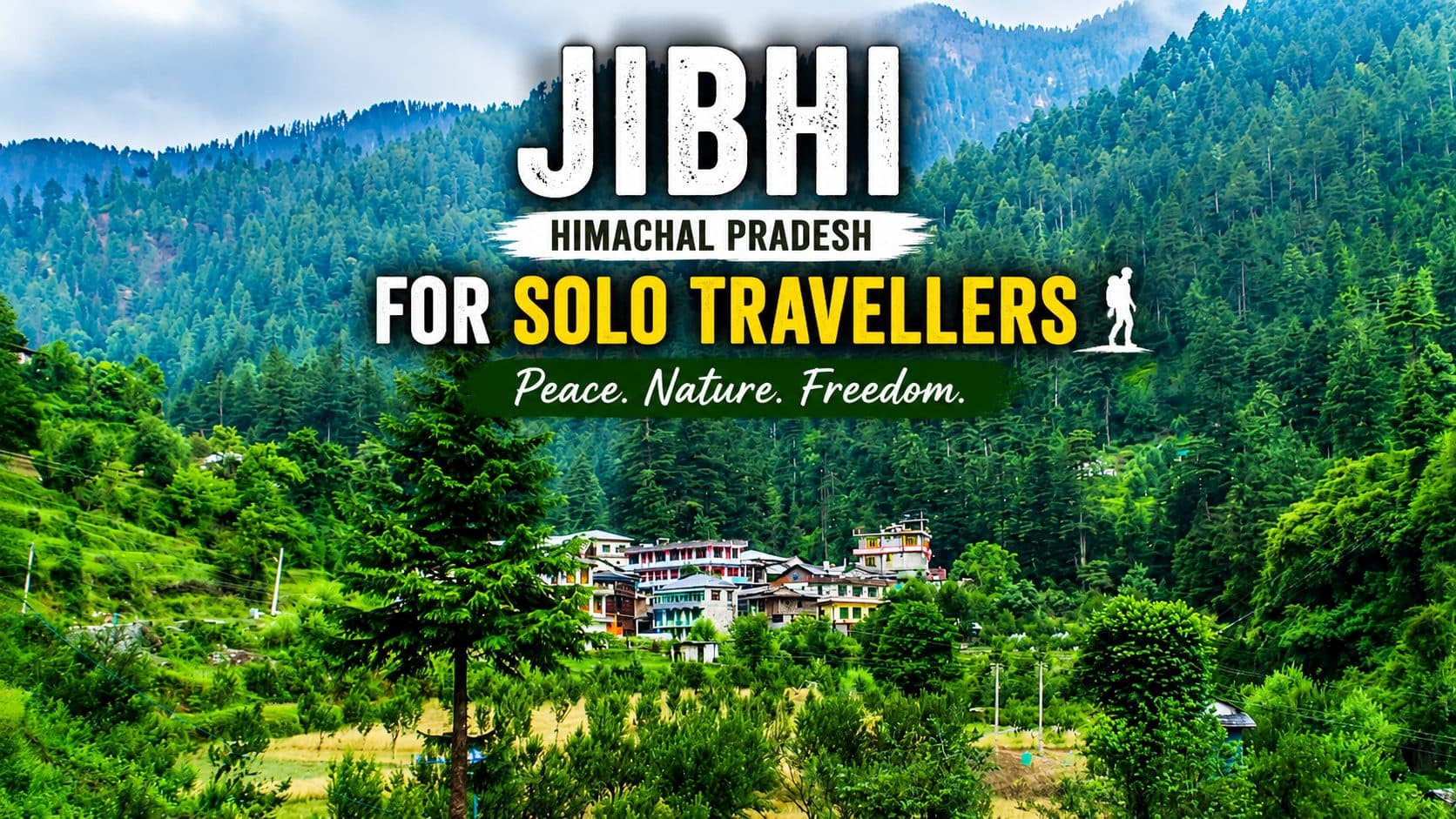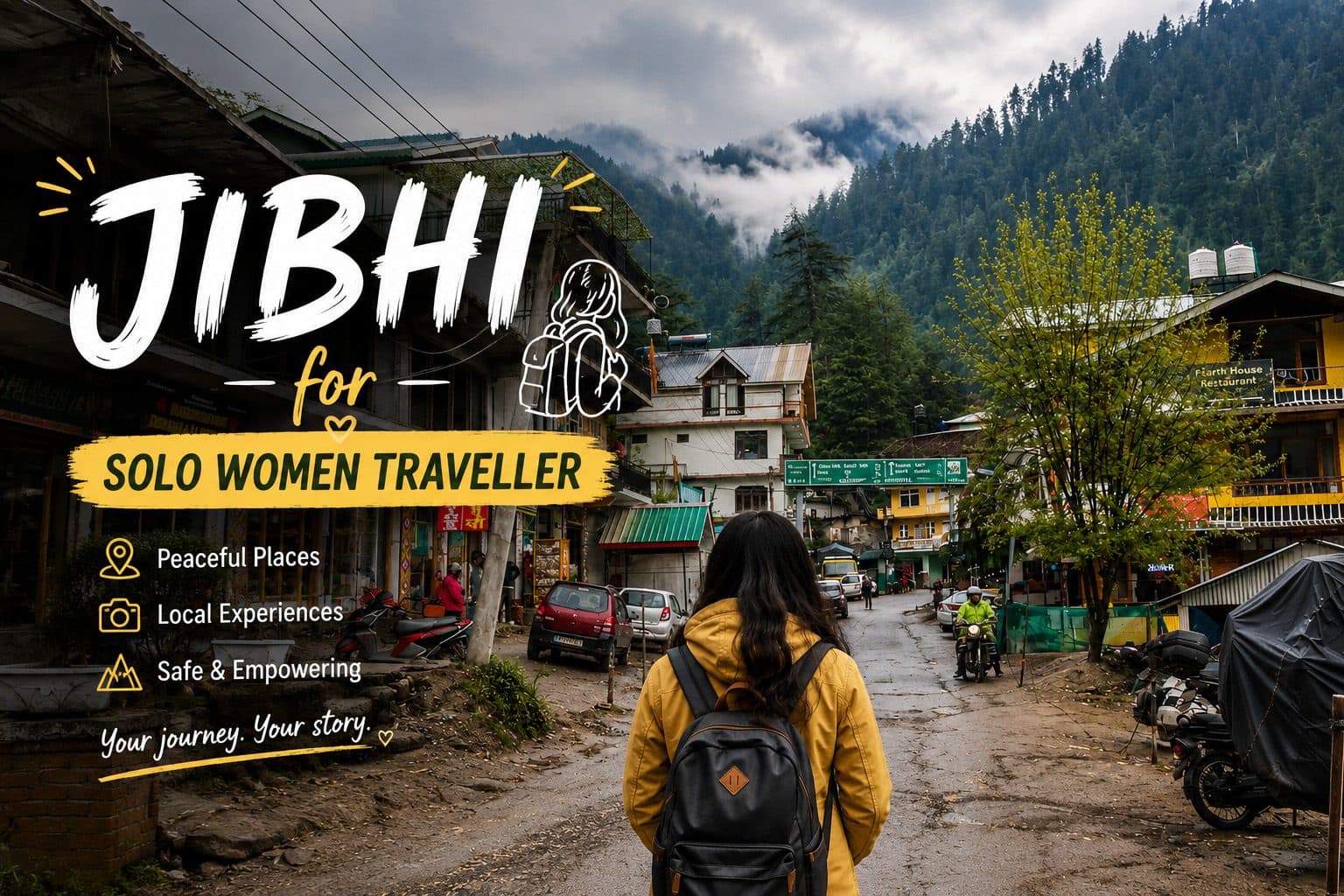
One of Himachal's safest destinations for women travelling alone. Here's what that actually means — and what it doesn't.
Every time we ask a solo woman why she chose Jibhi, the answer is usually a version of the same thing: she'd read that it was safe, but she wasn't entirely sure what that meant, or whether it was the kind of 'safe' that just means nobody actively robbed her.
So we'll be specific. Because 'safe' deserves an actual explanation, not just reassurance.
Jibhi is a small village in the Tirthan Valley, Himachal Pradesh. It has a permanent population of a few hundred people. The economy ran almost entirely on Agriculture before tourism came. The homestay and guesthouse model means the person renting you a room is usually the same person whose family has lived in that valley for generations. The social fabric is tight and relatively traditional — which, in terms of solo travel safety, tends to work in your favour.
That said, this isn't a post that's going to tell you there are zero precautions to take. There are. They're just not the precautions most solo women expect.
Why Jibhi Is Different
Jibhi doesn't feel like urban India. That matters more than it sounds.
In cities, the density and anonymity that create safety problems are everywhere. In a village like Jibhi, neither of those things exist. The valley is small enough that strangers are noticeable. The community has a direct economic stake in guests having a good experience and returning — and in recommending the place to others. This isn't naive; it's just how small tourism economies work.
Most solo women who come to Jibhi describe the same experience: a strong sense of being in a place where people look out for visitors, where homestay hosts feel more like hosts than service providers, and where the overall atmosphere is calm and unhurried. That reputation is consistent enough across enough independent accounts that it's meaningful.
The GHNP buffer zone. Jibhi sits at the edge of the Great Himalayan National Park buffer zone. This matters for a specific reason: when locals and experienced visitors mention 'precautions after dark,' they are primarily talking about wildlife — leopards and occasionally other animals are active at night in this area. That's the primary after-dark concern in Jibhi. Not people.
That's a significant distinction.
The Honest Precautions
We'd rather give you the actual list than a vague set of generic travel tips.
After dark: it's about wildlife, not people
Jibhi is in the buffer zone of the Great Himalayan National Park. Leopards are present in the area and are occasionally spotted. After dark — specifically after about 9 PM — avoid wandering alone on unlit forest trails or away from the lit parts of the village. This is the real reason locals recommend caution after dark. It's the same caution they apply themselves.
The village lanes, lit guesthouses, and the main path along the stream are fine. The forest above the village, or unlit stretches of road toward the waterfall or higher trails, are where this applies.
Tell someone your plans
This applies everywhere solo, not just Jibhi. Before any day out — a long trail walk, a day trip to Jalori Pass, an evening at a café — tell your accommodation host where you're going and when you expect to be back. This is common sense in any mountain environment. It's also the kind of thing a good homestay host will ask you without being prompted, because they genuinely want to know you're safe.
Standard precautions apply
Jibhi is safe relative to almost anywhere else in India. That doesn't mean standard solo travel awareness goes out the window. Trust your instincts in any individual situation. Keep your phone charged. Download offline maps before you leave the guesthouse — mobile connectivity in parts of the valley is variable. Share your live location with someone at home if it makes you feel better. These are sensible habits anywhere.
Alcohol and evenings
There are cafés in Jibhi that serve alcohol. Solo women drinking at them have reported no issues — the café culture in Jibhi is relaxed and largely traveller-facing, not the kind of male-dominated evening scene you'd find in some Indian hill stations. That said, the same awareness you'd apply anywhere applies here: know how you're getting back, be clear about your boundaries, and if something feels off, leave. Your instincts are usually right.
Choosing the Right Stay
For solo women specifically, the type of accommodation matters — and not just for practical safety reasons. Where you stay shapes your entire experience of the place.
Homestays and small properties. The strongest recommendation for solo women in Jibhi is to stay at a small, family-run homestay or property rather than a large resort. The reason is simple: a host family provides an informal safety layer that a large commercial property simply doesn't. Your host knows who's around, knows the village, and is motivated to make sure you're comfortable and safe. Many solo women specifically credit the homestay model for making Jibhi feel so different.
Room locks and basic infrastructure. Confirm before booking that your room has a functioning lock. The overwhelming majority of Jibhi homestays are fine on this front — hosts who take solo women as guests consistently know to ensure this — but it's worth checking rather than assuming.
Reviews from solo women specifically. Before booking anywhere, check reviews for mentions of solo female travel. The language is usually direct and honest. Jibhi properties that are genuinely good for solo women tend to get explicitly mentioned for it.
Winterfell Jibhi: A small, family-run property at two locations — Jibhi and Tandi — designed for guests who want a quiet, personal experience over a commercial one. Multiple solo women travellers have stayed and returned. Book directly at winterfelljibhi.com for the clearest picture of what's available and which location suits your trip best.
The Solo Women's Jibhi Itinerary: 3 Days
This is a practical, tested three-day structure. It's gentle enough to decompress and thorough enough to actually see the place.
Day 1 — Arrive, settle, and just be here
Arrive before dark. If you're coming from Delhi or Chandigarh, the drive or bus reaches Jibhi by late afternoon if you leave early. Check in, meet your host, and ask them to walk you through what's nearby — most will do this naturally.
The evening is for the village. Walk the lanes. Sit at a café. The Tirthan River runs alongside the village — find a spot above it and just listen. This first evening isn't about seeing things; it's about arriving at the pace of the place. Dinner at your guesthouse or at one of the cafés on the main lane. Early night.
Day 2 — The full Jibhi morning and a longer afternoon
Rise early. The best light in Jibhi is between 6 and 8 AM — the valley still has mist in it, the air is clear and cold, and the trail to the Jibhi Waterfall is entirely to yourself. The waterfall is a 15–20 minute walk from the village. Go now, in the morning, before the day-trippers arrive. Take your time.
Back for breakfast. Mid-morning is good for the village itself — the market lane, the old wooden houses, the stream. Jibhi is photogenic in a way that reveals itself slowly.
Afternoon: Chehni Kothi. A 45-minute walk from the village, the ancient tower fort above the valley is one of the area's most interesting structures and rarely crowded on weekday afternoons. The walk up through the forest is quiet and well-trodden. Go in the afternoon, return before dark.
Evening: bonfire if your guesthouse runs one, or a longer dinner at a café. Most of Jibhi's better cafés are on or near the main lane — the atmosphere in the evening is easy and social without being overwhelming.
Day 3 — Jalori Pass and Raghupur fort
This is the big day if you're visiting outside monsoon (July–September). Hire a driver from your guesthouse — ask your host to arrange one they know, which is both safer and usually cheaper than negotiating independently. The road to Jalori Pass is manageable in a 4x4 or good SUV.
Jalori Pass sits at around 3,100 metres. From the top, it's a 3-kilometre uphill walk through oak forest to Raghupur fort — wide open meadows, with a fort ruins on top, you will get amazing 360 view of dhauladhar mountain ranges from here . The trail is clear and straightforward. Walk at your own pace. Return to Jalori Pass by 4 PM and drive back to Jibhi.
If monsoon rules out Jalori Pass, replace Day 3 with a day in the Tirthan Valley — the GHNP entry near Gushaini is a beautiful half-day, and Banjar town (8–10 km) is worth a look for a change of scene.
Connecting with Other Travellers
Solo travel and solo isolation are different things. Most people who come to Jibhi solo don't stay solo for long — the cafe culture, the small scale of the village, and the travel communities on Instagram and Reddit (especially r/solotravel and r/IndiaTravelTips) mean that other solo travellers tend to find each other quickly.
The best place to make this happen is the cafés — specifically those with open seating arrangements, bonfire areas, or communal tables. Ask your host which café tends to have the most mixed traveller crowd on any given evening. They'll know.
If you prefer to pre-connect before arriving, the India solo travel communities on Reddit are useful and generally active. A post saying you're heading to Jibhi in a specific window will typically get responses from others planning the same.
What Solo Women Actually Say About Jibhi
These are consistent themes from solo women travellers across reviews, blogs, and travel communities — not a single source:
The homestay host relationship is the thing that makes the difference. Knowing your host is looking out for you changes the entire emotional texture of a solo trip.
Nobody bothers you. That's the phrase that comes up most often. Locals don't stare, nobody follows you, nobody tries to engage beyond a normal level of friendliness. This surprises people who are used to more intrusive experiences elsewhere in India.
The scale helps. Jibhi is small enough that you never feel lost or out of place. You quickly get a mental map of where everything is, which itself reduces anxiety.
The evenings are the part people were most nervous about beforehand and most positive about afterwards. The cafés are welcoming, the overall atmosphere is calm, and the wildlife-not-people nature of the after-dark precaution is usually a relief to learn.
Women who come solo often return with someone they want to show the place to. The conversion rate from solo trip to 'I want to bring my friends here' appears to be very high.
The Bottom Line
Jibhi is as safe as it's described. But it's worth being specific about why, because 'safe' is a word that gets used lazily in travel writing.
The safety comes from scale (a small village where strangers are noticeable), structure (the homestay model means a host with a genuine stake in your wellbeing), and setting (a village economy built on tourism, where guest experience directly affects livelihoods). These are structural conditions, not just good luck or good vibes.
The precautions that exist are mostly about the mountain environment — wildlife after dark, trail safety, the weather in monsoon — and are the same precautions any sensible traveller in a remote Himalayan village would take.
A solo woman who comes to Jibhi prepared, staying at a good homestay, with her days loosely planned but not rigidly scheduled, will almost certainly leave feeling that it was one of the easier and more genuinely restful solo trips she's taken in India.
That's not marketing. It's what people consistently report.
Thinking about Jibhi solo? Reach out to us directly at winterfelljibhi.com — we're happy to answer questions about timing, which property suits your trip, and what conditions look like for your dates. No pressure, just honest information.
Frequently Asked Questions
Is Jibhi safe for solo women travellers?
Yes — Jibhi is consistently regarded as one of the safer destinations in Himachal Pradesh for solo women. The village is small, the homestay model creates a natural host-guest safety relationship, and the community has a strong economic stake in guests having a good experience. Solo women who've visited report that nobody bothers them, evenings are comfortable, and the overall atmosphere is calm and welcoming.
What is the main safety concern for solo women in Jibhi?
The primary after-dark precaution in Jibhi is wildlife, not people. Jibhi sits in the buffer zone of the Great Himalayan National Park, and leopards are present in the area. After around 9 PM, avoid unlit forest trails or paths away from the lit village. This is the same advice locals follow themselves, and it applies to all travellers, not just women. The village lanes, lit guesthouses, and the main stream-side path are completely fine at night.
Do solo women experience harassment in Jibhi?
The consistent feedback from solo women who've visited Jibhi — across reviews, travel blogs, and communities like Reddit's r/solotravel — is that they don't. The village is small enough that behaviour is visible, locals are generally respectful, and the traveller demographic tends to be mixed and non-intrusive. It's not zero-risk anywhere, but Jibhi has a genuinely positive track record on this front.
What kind of accommodation is best for solo women in Jibhi?
Small, family-run homestays or guesthouses are strongly preferred over larger commercial properties. The host-guest relationship at a homestay provides an informal but real safety layer — your host knows the village, knows who's around, and is invested in your wellbeing. Confirm the room has a functioning lock before booking, and look for reviews that specifically mention solo female stays.
Is it safe to trek alone in Jibhi?
Day treks like the Jibhi Waterfall trail and the walk to Chehni Kothi are well-trodden, short, and fine for solo women in daylight. Longer treks — the Jalori Pass road or the walk to Serolsar Lake — are best done with a local driver arranged through your guesthouse, not for safety reasons per se, but because the road is remote and having local knowledge is practically useful. Avoid any trailhead departures after dark due to wildlife.
What should I do if I'm travelling to Jibhi for the first time solo?
Book a homestay or small guesthouse where you'll have a host rather than an anonymous check-in. Tell your host your plans each morning. Share your live location with someone at home if that's your habit. Arrive before dark on your first day. These are sensible steps for any solo mountain trip — nothing specific to Jibhi.
Is Jibhi good for solo travel in winter?
Yes, with caveats. Winter (December–February) is cold — nights drop well below zero — but Jibhi itself remains accessible and quiet. It's a beautiful season: snow on the ridges, empty trails, very low footfall. The main practical consideration is that some cafés and guesthouses operate with reduced hours or close for the deep winter. Book in advance and confirm your accommodation is open. The cold is real; pack for it.
Can I find other solo travellers to connect with in Jibhi?
Yes — the café culture makes this easy. Jibhi's cafés have open seating arrangements and bonfire areas that naturally encourage solo travellers to mix. Ask your host which café is busiest with travellers on any given evening. If you want to pre-connect before arriving, communities on Reddit (r/solotravel, r/IndiaTravelTips) regularly have Jibhi threads, particularly in peak seasons.
How do I get to Jibhi as a solo woman — is the journey safe?
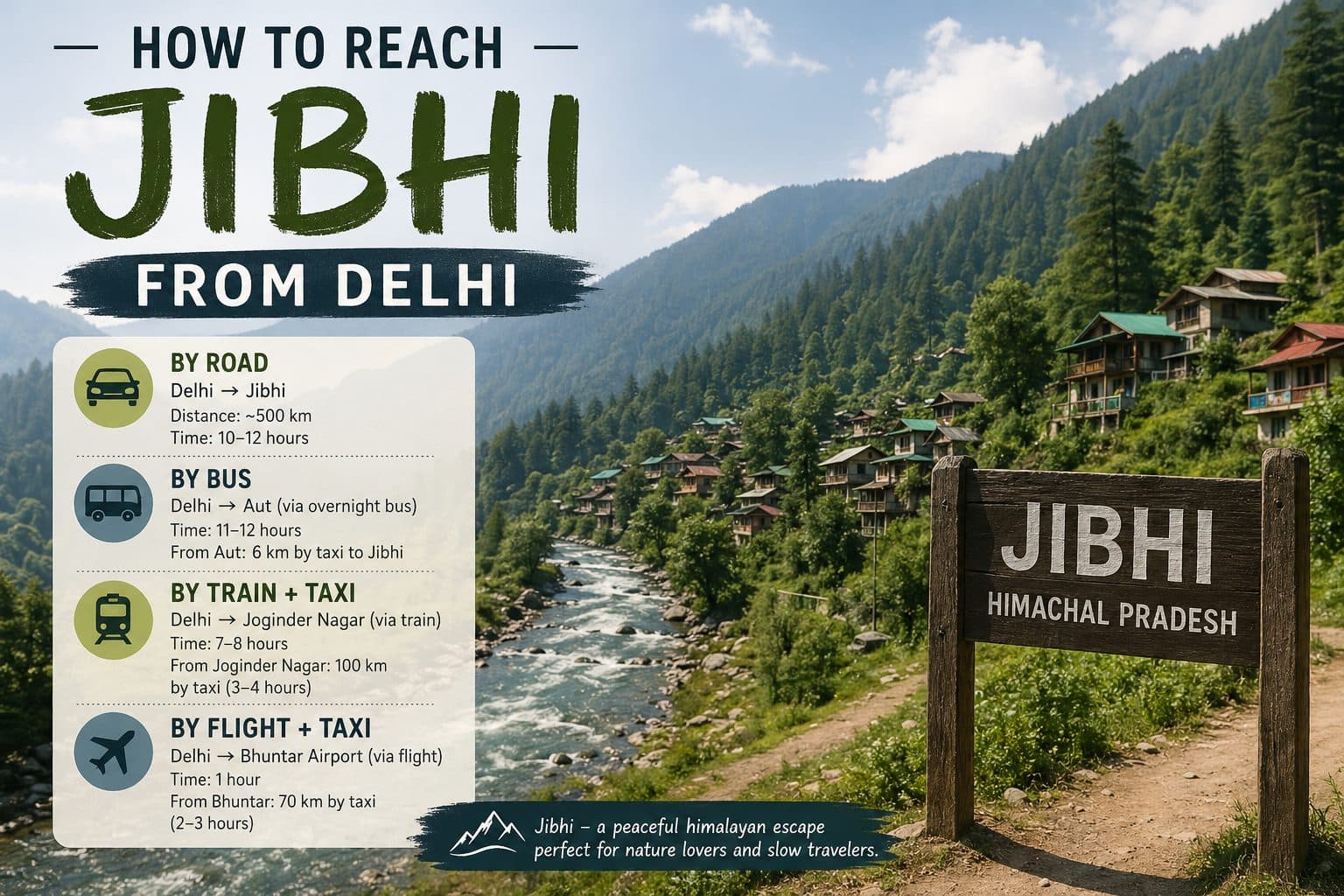
The most common route is: Delhi → Chandigarh by train then Chandigarh → Aut by HRTC/volvo bus or shared taxi, then Aut → Jibhi by local taxi (arrange one through your guesthouse in advance for arrival day). The journey is long but straightforward. Travel in daylight for the mountain road section — the Aut to Jibhi stretch is best covered before evening. Your guesthouse can coordinate an Aut pickup if you confirm your arrival time.